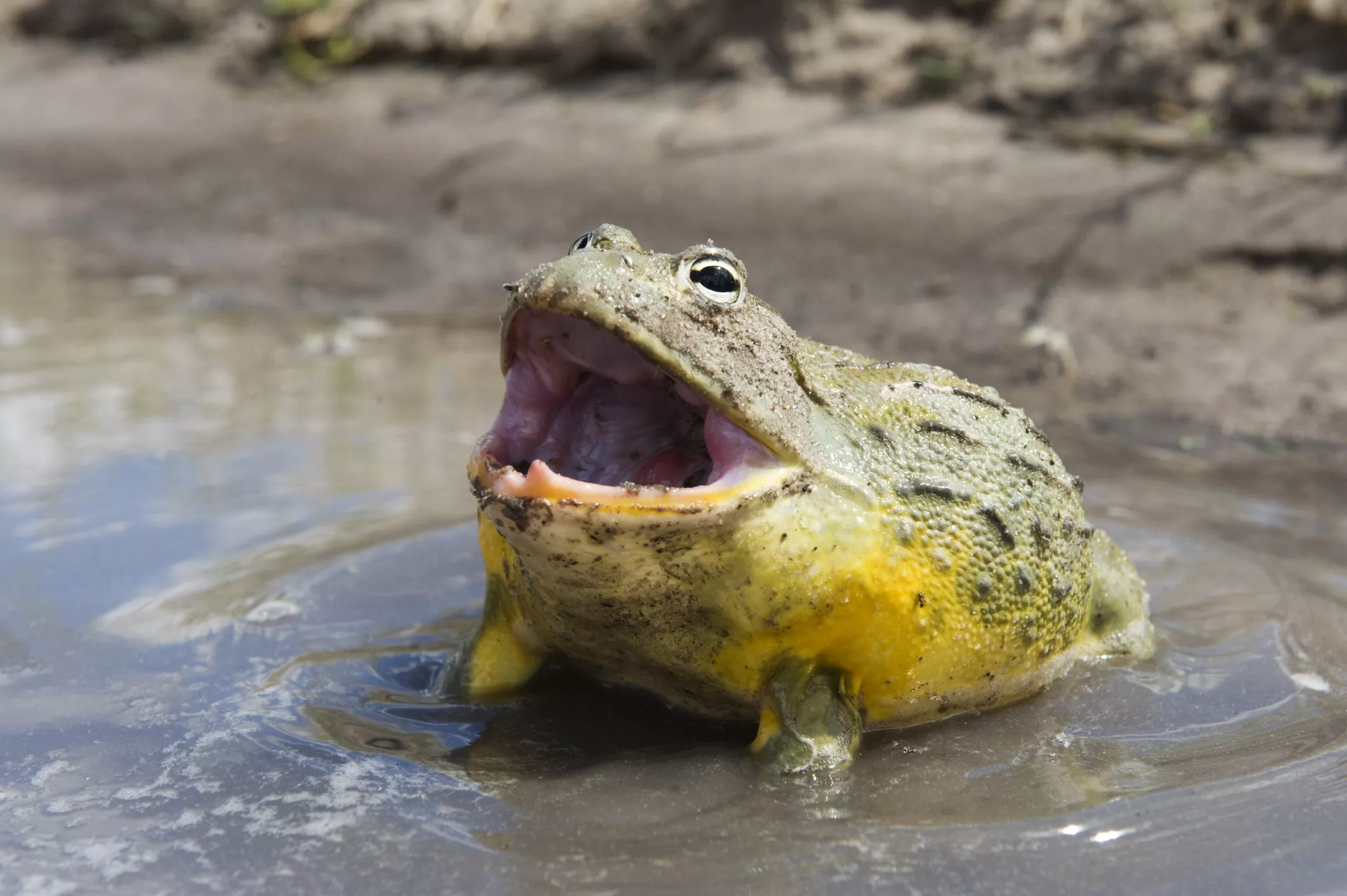
Key Takeaways African bullfrogs are relatively easy to care for and are known for their ornery nature, making them more suitable for observation rather than handling.They require a 10-gallon tank or larger, with appropriate heat, humidity, and a specific type of substrate to replicate their natural environment.Their diet is varied, focusing on live prey like crickets and worms, but must not include grocery store meats.
Key Takeaways
African bullfrogs are relatively easy to care for and are known for their ornery nature, making them more suitable for observation rather than handling.They require a 10-gallon tank or larger, with appropriate heat, humidity, and a specific type of substrate to replicate their natural environment.Their diet is varied, focusing on live prey like crickets and worms, but must not include grocery store meats.
African bullfrogs, also called pixie or pyxie frogs, are among the largest frog species. They are native to Africa but can be found in homes worldwide. Their skin is primarily olive green, with a lighter belly and orange around the limbs. Known for being a bit ornery, African bullfrogs might not be the best choice for handling or play. However, they are fun to watch and suitable for beginners, as their care is relatively easy.
Discover everything you need to know about caring for an African bullfrog.
Breed Overview Common Names: African bullfrog, pixie frog, pyxie frogScientific Name: Pyxicephalus adspersusAdult Size: Males can reach up to 10 inches long and weigh 4 pounds or more; females grow to about 6 inches long and weigh around 2 pounds.Life Span: 20 years in the wild; up to 40 years in captivity
Breed Overview
Common Names: African bullfrog, pixie frog, pyxie frogScientific Name: Pyxicephalus adspersusAdult Size: Males can reach up to 10 inches long and weigh 4 pounds or more; females grow to about 6 inches long and weigh around 2 pounds.Life Span: 20 years in the wild; up to 40 years in captivity
African Bullfrog Behavior and Temperament
African bullfrogs are moderately active, making them enjoyable to watch in their tanks. They are typically easygoing and low-maintenance pets. You'll need to feed them approximately every other day and clean their tanks once or twice a week.
Males should not be housed together because they can be aggressive and territorial. Male bullfrogs will guard their tadpoles and protect them to aid in their survival, although they may sometimes eat their own tadpoles.
Some African bullfrogs can tolerate limited handling for short periods, but it's essential to be cautious to protect their delicate skin. They can use their powerful legs to spring out of your hands and may injure themselves in the process.
Additionally, African bullfrogs have sharp teeth, being one of the few frog species with them, and they may bite humans if handled. They typically croak loudly to indicate stress. However, respecting their boundaries usually results in a laid-back pet.
Housing the African Bullfrog
Caring for pet frogs is generally simple, as long as their habitat is properly set up. The larger the frog, the larger the tank required; a medium-sized African bullfrog needs at least a 10-gallon tank, though bigger is better. While most frog species have smaller males, male African bullfrogs are larger than females. These frogs should live alone due to their cannibalistic tendencies.
Small, smooth rocks can be used as the tank's substrate. Fill the tank about one-third with dechlorinated water, using progressively larger stones to create a beach on one side. This setup provides a place for your frog to climb and allows it to spend time out of the water when it wants to dry off.
Providing a container of dirt allows your bullfrog to burrow. In the wild, African bullfrogs burrow entirely into the dirt and hibernate for up to two years to escape dry seasons. However, in captivity, controlled temperature and humidity make hibernation unnecessary.
Clean the tank one to two times per week, or more often, to maintain fresh water.
Heat
A room that doesn't drop below 75 F should be appropriate for your bullfrog. If you find the frog isn't very active or isn't eating much, try increasing the temperature.
Simple water heaters designed for fish tanks and heat lights made for reptiles can be utilized to create an ideal environment for your African bullfrog.
Light
African bullfrogs need a cycle of 12 hours of light and 12 hours of darkness daily. Ensure they are out of direct sunlight. While not essential, a UVB light is recommended to enhance nutrient absorption.
Humidity
Maintaining high humidity is crucial for amphibians because of their sensitive skin. Bullfrogs need a damp tank and ample water to swim.
Keep humidity levels between 80% and 90%, monitored with a hygrometer. To increase humidity, mist the tank with clean water several times a day.
Substrate
Substrate lines the bottom of your bullfrog’s enclosure, helping maintain humidity and making the tank resemble the frog's natural environment.
Coco fiber, derived from coconut husks, and peat moss are good substrate options. The ideal substrate is organic and retains heat and moisture.
Avoid using any soil that has been treated with insecticides or other chemicals. Be sure it's clean, and change it frequently.
African bullfrogs may ingest substrate, so ensure the lining materials are easily digestible and safe.
What Do Frogs Eat?
Food and Water
These large frogs are carnivores, consuming anything they can fit in their mouths, like insects, other frogs, and small rodents or birds.
A healthy diet for bullfrogs includes:
Avoid feeding your African bullfrog these foods:
Young bullfrogs typically eat daily or every other day, while adults require feeding two to three times per week. Serve their food in a shallow dish or on a flat rock. Consult your veterinarian for specific feeding amounts based on your frog’s age and size.
It's important to vary the menu at each feeding to mimic the diverse diet they would naturally have in the wild. Additionally, avoid overfeeding these voracious eaters.
You may provide a shallow water dish in addition to the tank water if desired.
Common Health and Behavior Problems
African bullfrogs have a long lifespan and require minimal healthcare, but they can be susceptible to the following:
Choosing Your African Bullfrog
Obtain your African bullfrog from a reputable breeder or rescue organization. Search for reptile and amphibian groups online or ask your local pet shop for recommendations. Prices typically range from $25 to $75.
A healthy African bullfrog has the characteristic olive-green skin, free of abnormal bumps or lesions, and clear eyes. Cloudy eyes may signal disease.
Males grow significantly larger than females, so for a smaller frog, consider choosing a female. However, females are equally voracious and sensitive to handling as males.
130 Creative Frog Names: Funny, Unique, and Fictional Options
Similar Species to African Bullfrogs
If you're interested in similar pets, consider:
Alternatively, explore other types of reptiles and amphibians that can be your new pet.