Key Takeaways Climate considerations are crucial when keeping aquatic turtles in outdoor ponds, as species like red-eared sliders are hardy, but others may need warmer temperatures.Safety and security measures, including secure fencing and potential covers, are important to prevent turtles from escaping and to protect them from predators.A turtle pond should have varied water levels, a basking area, hiding spots, plants, and adequate oxygenation to ensure a healthy environment for the turtles.
Key Takeaways
Climate considerations are crucial when keeping aquatic turtles in outdoor ponds, as species like red-eared sliders are hardy, but others may need warmer temperatures.Safety and security measures, including secure fencing and potential covers, are important to prevent turtles from escaping and to protect them from predators.A turtle pond should have varied water levels, a basking area, hiding spots, plants, and adequate oxygenation to ensure a healthy environment for the turtles.
Aquatic turtles can be great pets, though they're not ideal for young children and do require a good deal of care. Similar to tortoises and box turtles, aquatic turtles can benefit from spending time outdoors in a backyard pond. However, there are some important points to keep in mind.
13 Types of Turtles That Make Great Pets
Climate Considerations
Depending on where you live, putting an aquatic turtle outdoors might be something you can only do for a few months during the summer. You need to consider the natural range of the species you have. For example, red-eared sliders are quite hardy and adaptable. However, some other species need warmer temperatures, so you must keep the natural habitats of your turtle in mind when deciding to house them outdoors. In warmer climates, aquatic turtles may be able to live outdoors year-round. It is also possible to hibernate some species in an outdoor pond, although this is not without risk.
Safety and Security
Pet aquatic turtles kept in outdoor ponds do need to have secure fencing. There should be a fence around the pond—at least two to three times higher than the carapace length of your turtle, and sunk into the ground 6-10 inches to make sure there is no chance of escape. The fence should have a solid base, so turtles don't get caught up in the wire. This fence is meant to keep turtles enclosed, since they will wander in search of a mate, and it also helps keep predators out.
Consider installing a cover, such as chicken wire, over the pond area to protect turtles, particularly if predators like raccoons are common in your yard. Hatchlings and small turtles are highly vulnerable to predators and should be kept indoors until they reach a safer size.
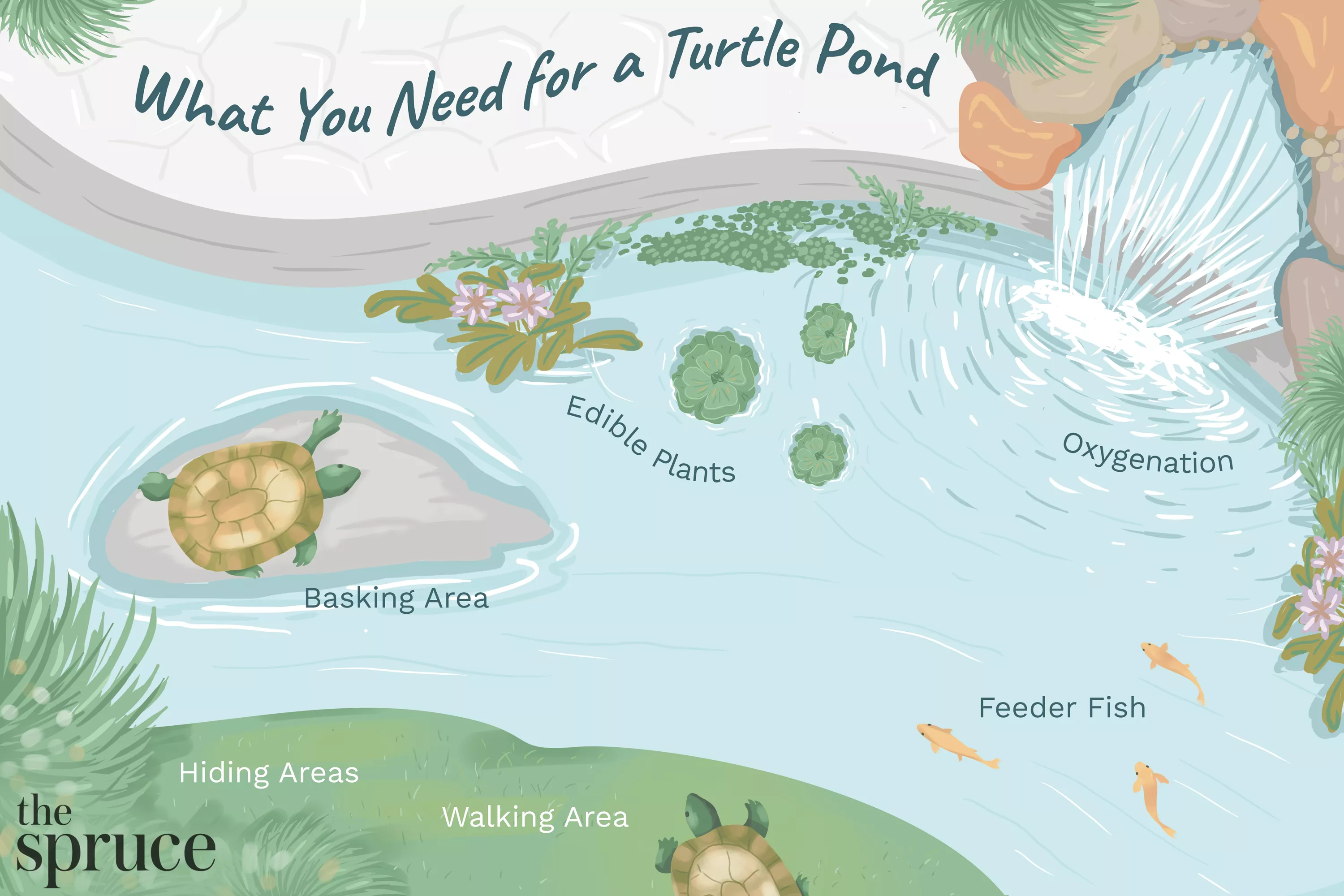
What Does a Turtle Pond Need?
The depth of a turtle pond will vary a bit depending on the species, but it should have a relatively large surface area as this provides better oxygen levels in the water. Red-eared sliders and some other turtles can handle a deeper pond, while some turtles prefer to be in shallower water, so consider the natural habits of the turtle species when planning your pond.
Tip You can use a pre-formed pond liner, a flexible pond liner (get the most durable one, as turtles have fairly sharp claws), or any large water vessel such as a plastic kiddie pool sunk into the ground to help customize water levels.
Tip
You can use a pre-formed pond liner, a flexible pond liner (get the most durable one, as turtles have fairly sharp claws), or any large water vessel such as a plastic kiddie pool sunk into the ground to help customize water levels.
Considerations for a turtle pond include:
Hibernating Turtles in Outdoor Ponds
Many North American aquatic turtles from temperate climates (including red-eared sliders) hibernate during cooler months. Aquatic turtles usually hibernate at temperatures lower than about 50 degrees Fahrenheit. Hibernating turtles can be a risky proposition, so if you are going to hibernate a turtle in an outdoor pond, you must be absolutely certain your turtle is healthy and strong.1
Some experts argue that hibernating aquatic turtles outdoors carries significant risks because replicating their natural conditions in a backyard pond can be challenging. They recommend bringing all aquatic turtles indoors for the winter. You should only try hibernating species that are native to your area or colder climates. If you do decide to try hibernating aquatic turtles, there are several important things to consider:
Tip Avoid heaters that raise the temperature much above 50 degrees Fahrenheit, as a cold and inactive turtle that is not at a low enough temperature to hibernate is likely to be severely stressed.
Tip
Avoid heaters that raise the temperature much above 50 degrees Fahrenheit, as a cold and inactive turtle that is not at a low enough temperature to hibernate is likely to be severely stressed.
A Guide to African Sideneck Turtles: Caring for These Unique Pets