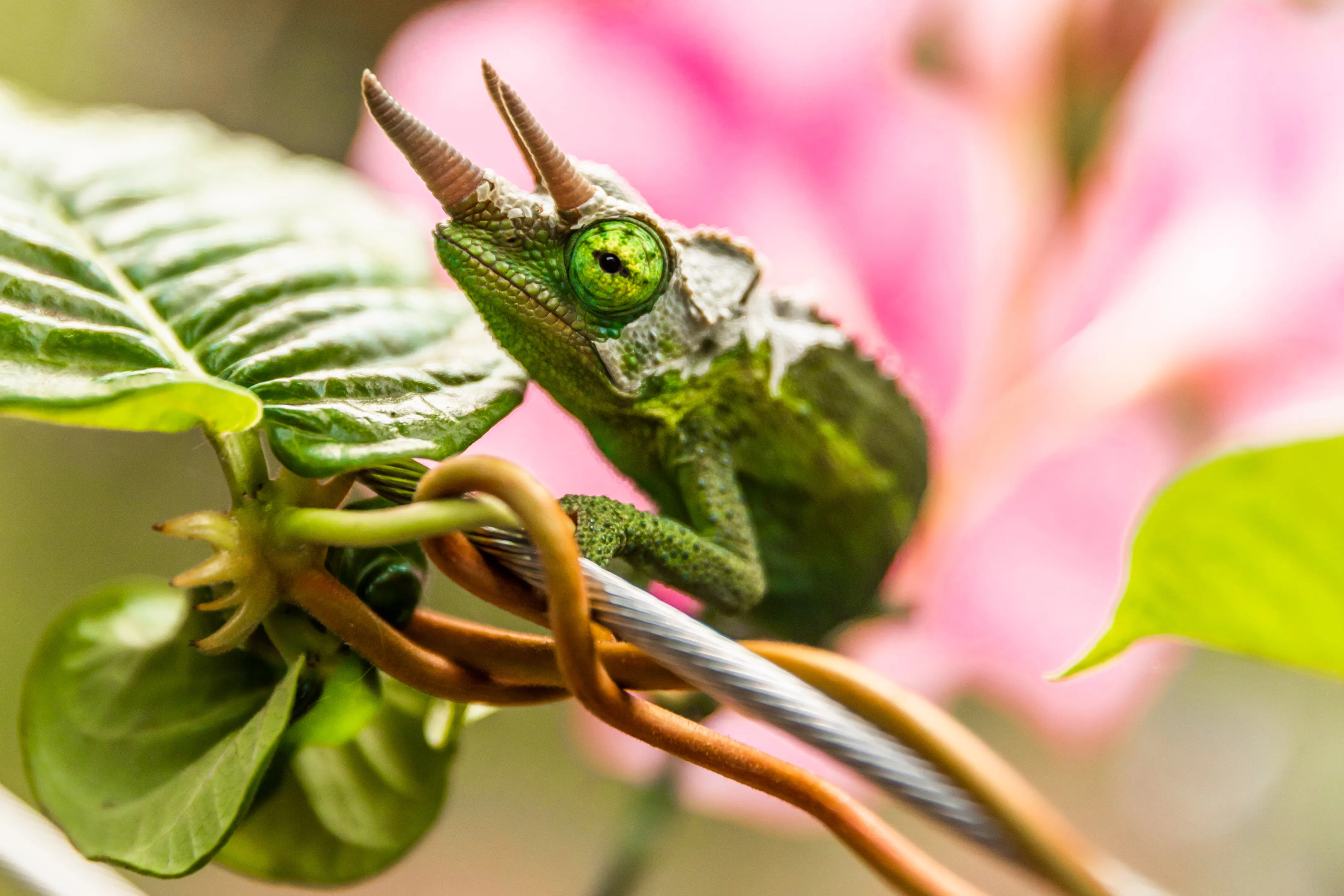
Key Takeaways Chameleons require specific housing conditions, including ample climbing space, privacy, and varied temperatures.A proper diet for chameleons includes gut-loaded insects supplemented with calcium and some foliage.It's important to keep chameleons solitary, as they are territorial; males can be especially aggressive to one another.
Key Takeaways
Chameleons require specific housing conditions, including ample climbing space, privacy, and varied temperatures.A proper diet for chameleons includes gut-loaded insects supplemented with calcium and some foliage.It's important to keep chameleons solitary, as they are territorial; males can be especially aggressive to one another.
Chameleons are a unique and bright species with the ability to change in color to camouflage with their environment, regulate temperatures, and communicate with other chameleons. They can also change color when they're stressed or happy.
Caring for a chameleon requires proper natural habitats, meaning big cages to accommodate their need to climb, some privacy, and various temperatures throughout its home. Additionally, they need a gut-loaded and calcium-supplemented diet. This beautiful creature may be the pet for you if you're willing to commit to properly caring for it.
Warning Being territorial and solitary animals, chameleons should be kept by themselves; males are especially aggressive toward one another.
Warning
Being territorial and solitary animals, chameleons should be kept by themselves; males are especially aggressive toward one another.
Species Overview Common Name: ChameleonScientific Name: ChamaeleonidaeAdult Size: Widely varies—27 inches at largest, and 0.5 inches at smallestLife Expectancy: 3 to 10 years in captivity
Species Overview
Common Name: ChameleonScientific Name: ChamaeleonidaeAdult Size: Widely varies—27 inches at largest, and 0.5 inches at smallestLife Expectancy: 3 to 10 years in captivity
Behavior and Temperament
Young chameleons are usually a dull gray or brown color and can change shades a bit. At around 5 months of age, the adult color and the ability to change colors develop, and a range of colors—including green, blue-green, turquoise, and black—can be seen.
Changing colors provides camouflage, temperature regulation, and a means of communicating with other chameleons. Similar to anoles, chameleons change colors in response to excitement, stress, temperature, lighting conditions, the presence of another chameleon, and other influences.
Generally, a dark brown to black chameleon is stressed, with the brighter colors reflecting a happier mood.
Chameleons use their tongues to catch prey. A chameleon's tongue can be up to 1.5 times the length of its body, allowing chameleons to catch insects from a distance. They primarily eat insects, but some will eat vegetation and small invertebrates.
Chameleon feet have three toes pointing in one direction and two that point the opposite way, which gives them a good grip on the tree branches they spend most of their time on. Many species also have prehensile tails. They have globular eyes that rotate like turrets and move independently, allowing them to scan a wide radius to hunt for food and look out for predators.
Housing a Pet Chameleon
The natural habits of chameleons make them tricky to care for. Chameleons are arboreal, meaning they live exclusively in trees. They need cages with ample foliage for climbing and privacy, and the enclosure must be quite large.
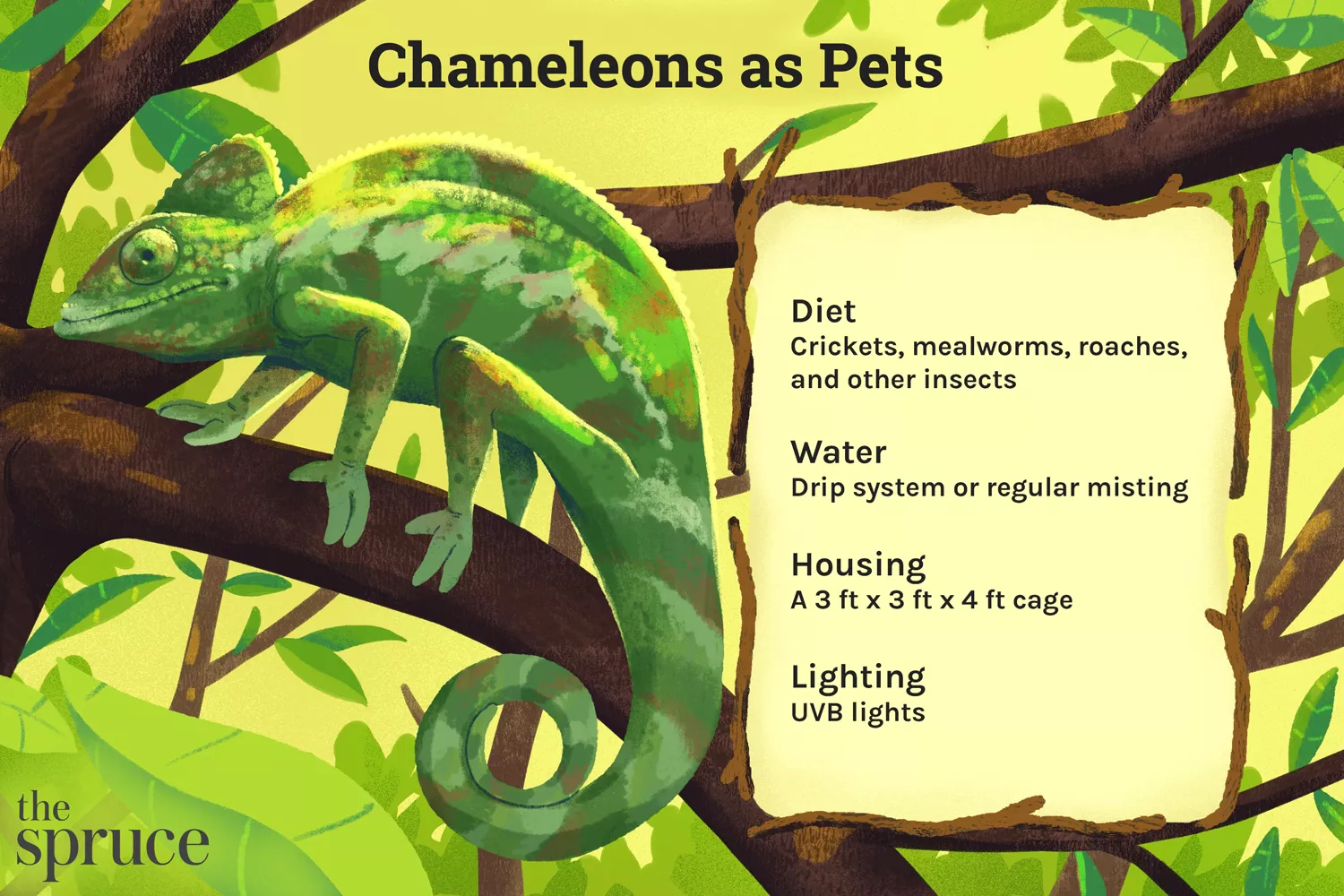
For the larger chameleons, a cage measuring 3 feet by 3 feet by 4 feet tall should be provided, but the more space the better. Ample ventilation is required, and a cage screened on three sides is best with poly mesh or vinyl-coated wire preferred to prevent toe injuries.
Branches of various diameters need to be provided for climbing, and the bulk of the cage space should be filled with these branches or live foliage. Ensure the plants are not toxic, as the chameleon may eat the foliage. Substrates made up of small particles (such as gravel, sand, bark, or moss) should be avoided to prevent the chameleon from accidentally eating it while catching prey.
Several basking areas of various temperatures must also be provided in a chameleon's enclosure. Some chameleons are happier at higher temperatures, others at lower temperatures. Be sure to research the specifics of your breed.
Chameleons get their water from droplets on leaves, so as a rule, they will not take water from a dish. Adequate water intake must be provided either through a drip system or by misting the enclosure at least twice daily.
Drip systems can be purchased or fashioned from a water container with a pinhole placed on top of the cage, or even by placing ice cubes on top of the cage to melt slowly and drip into the cage. If a drip system is used, keep the watering location consistent so the chameleon knows where to find water. Misting will also help keep the humidity levels up.
With a drip system, excess water should be collected and removed to prevent the humidity from getting too high.
Light
Chameleons need exposure to UVA and UVB rays. In addition, allowing some exposure to natural sunlight through an open window (glass filters out nearly all of the necessary UV radiation) will help keep chameleons happy and healthy. The UVB lights should be on for 10 hours a day.1
Warning Follow manufacturer directions to make sure you do not cause thermal burns on your chameleon.
Warning
Follow manufacturer directions to make sure you do not cause thermal burns on your chameleon.
Food and Water
Chameleons seem to do best on a variety of insects so you should try to feed as many types of insects as possible to your pet. Crickets, mealworms, superworms, wax worms, wax moths, and roaches are all good items to feed.
Prey food should be gut-loaded with calcium before feeding and should be dusted with a calcium supplement. Some nutritious leafy greens (avoid spinach, lettuce, and cabbage) and other vegetables and fruits can be offered in small amounts as chameleons will occasionally eat these.
Common Health Problems
Many chameleons suffer from calcium and vitamin A deficiencies, usually due to a poor diet. They're also prone to mouth rot, or stomatitis,2 an infection around the mouth that shows redness and excess saliva or drooling.
Another common ailment among chameleons is metabolic bone disease.1 This condition, which can be fatal if not treated appropriately, causes a chameleon's bones to become spongy. They'll look lethargic and may lose their appetite.
As with any condition where your pet seems ill or stressed, it's best to consult a veterinarian who specializes in reptiles. Try to avoid home remedies before you've consulted a vet.
Choosing Your Chameleon
When selecting a pet chameleon, it is best to find a captive-bred one. Wild-caught specimens are usually extremely stressed, carry a heavy parasite load, and have difficulty acclimating to captive conditions.
Chameleons are not the easiest reptiles to keep, and starting with a stressed pet will only make matters worse. In addition, the capture and shipping of chameleons (which fortunately is being more tightly regulated) results in the deaths of many animals. Many more die in transit than make it to the pet store.
Once you've found a captive-bred chameleon, observe them. They should be bright and active, able to change colors, and have a well-fleshed body.
Guide to Chameleon Care: Housing, Diet, and Keeping Your Pet Happy
Different Species of Chameleon
Several species of chameleons are popular as pets. Here are a few options to consider:
You can also check out our other chameleon breed profiles if you're still deciding which is the right pet for you.