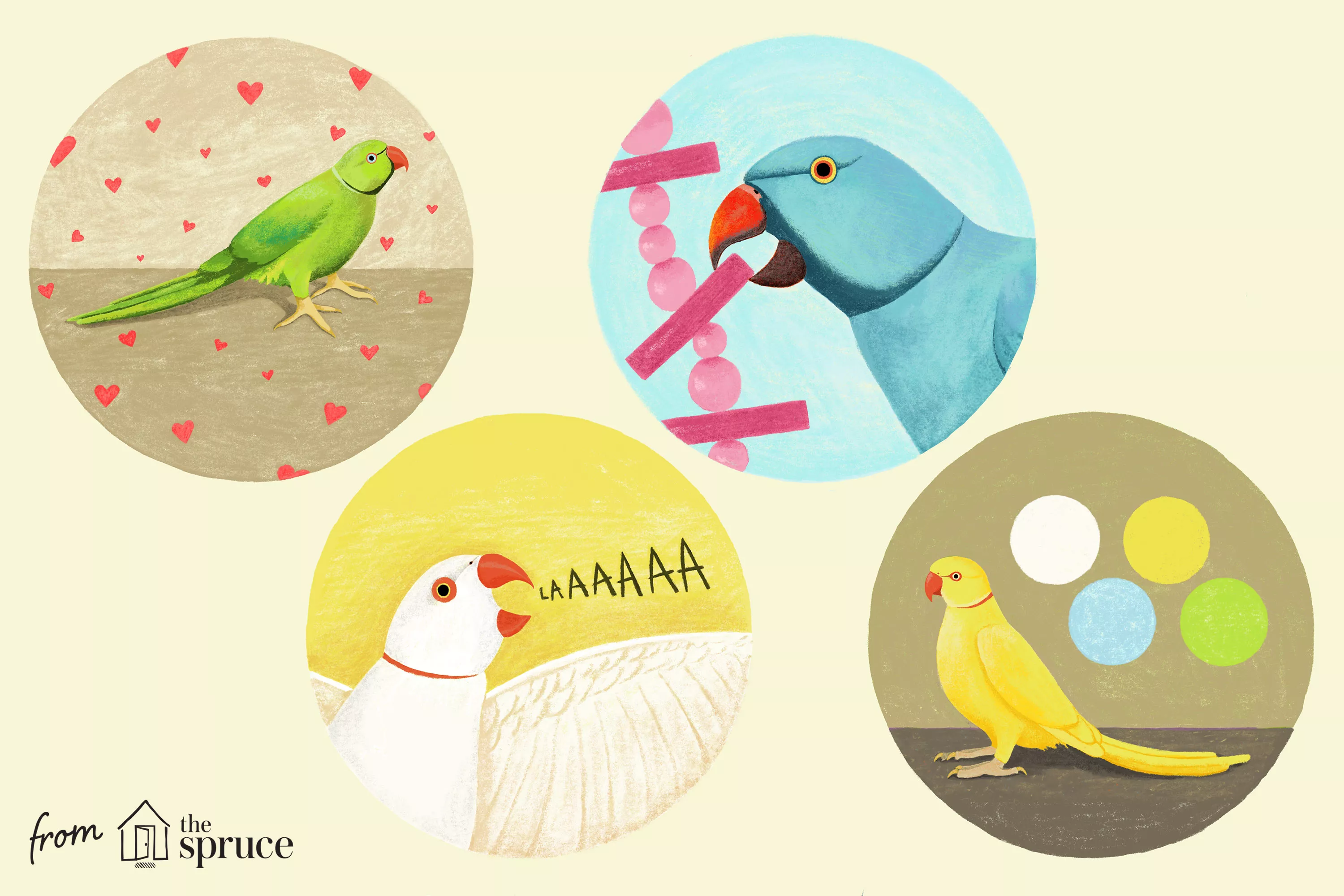
The Indian ringneck parakeet, a popular companion bird, is known for its vibrant coloring, medium size, and social nature. Highly intelligent, these birds enjoy learning and can become charming pets with proper care. They require daily interaction to remain tame and entertained. Before bringing one home, familiarize yourself with their unique traits and care requirements.
Indian Ringneck Parakeets Defy Their 'Difficult' Reputation
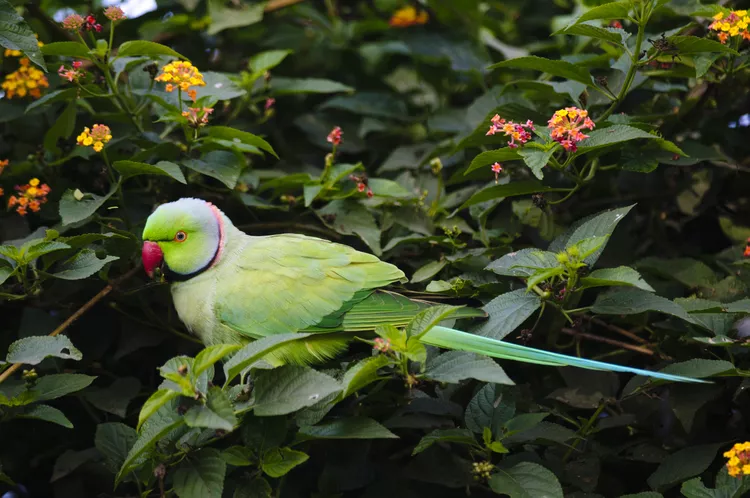
Indian ringneck parakeets have been kept in captivity for centuries but were regarded as an "ornamental,” or hands-off, bird species. Ringnecks still have a reputation for being somewhat nippy and difficult to tame. However, those who have grown to know these birds have found they can make loving pets when hand-fed as babies and properly socialized.
Ringnecks that are handled every day by their caretakers generally have charming personalities. They love working on new bird tricks, such as waving hello with a foot, with their humans. They also enjoy other mental challenges, including figuring out treat puzzles and learning to mimic sounds.
Ringnecks Might Cause Some Trouble During Adolescence
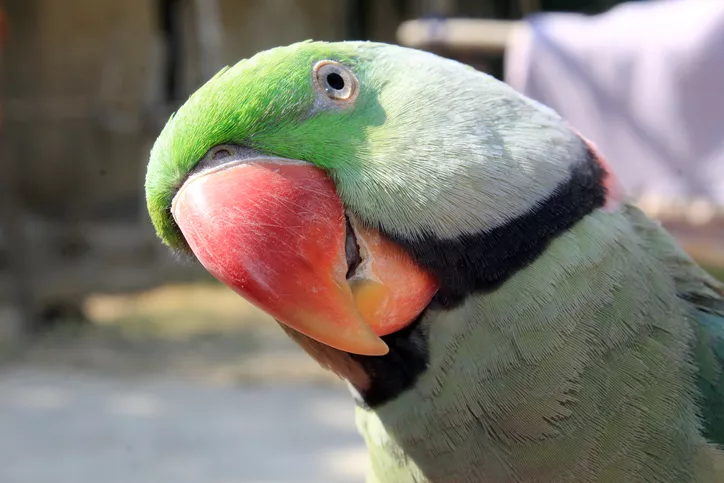
While ringnecks overall don’t deserve their “difficult” reputation, they can be a handful during their adolescence. Like some other bird species, young ringnecks—usually those between 4 months and 1 year old—often go through what’s called a “bluffing” phase. During this phase, hormonal changes can increase a bird’s aggressive tendencies, such as hissing, biting, and general resistance to interaction.
Some inexperienced owners might make the mistake of avoiding interacting with their birds during this phase, which can make them even more antisocial. The key to getting through the bluffing phase is to keep trying to bond with your bird while encouraging good behaviors. And remember that the phase should be over in less than a few months.
Ringnecks Are Referred to as Parrots and Parakeets
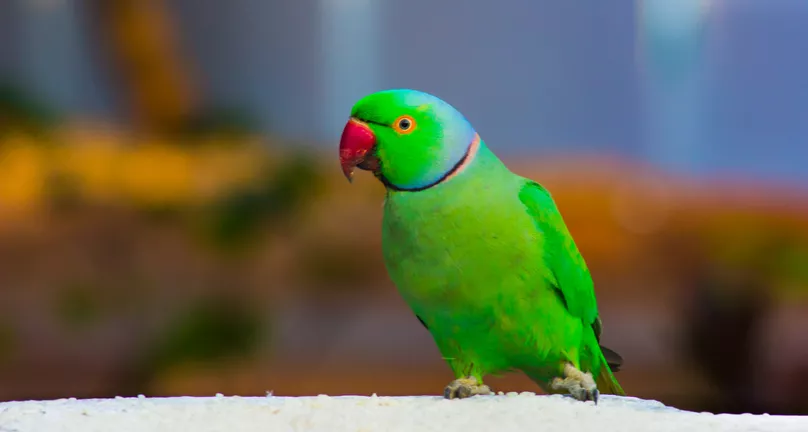
Indian ringnecks are often identified as parakeets due to their medium size and long tail feathers, typical characteristics of parakeets. However, they are also true parrots. This dual categorization reflects their unique place in the avian world. Still, many people refer to them as Indian ringneck parrots, which is also accurate.
Despite its medium size, the bird’s long parakeet tail causes it to need a larger cage than one might think. However, make sure the bar spacing of a large cage isn’t wide enough that the bird can get stuck or escape between bars. In addition, this active species needs lots of space outside the cage to stretch its wings and play.
They Come in a Variety of Colors
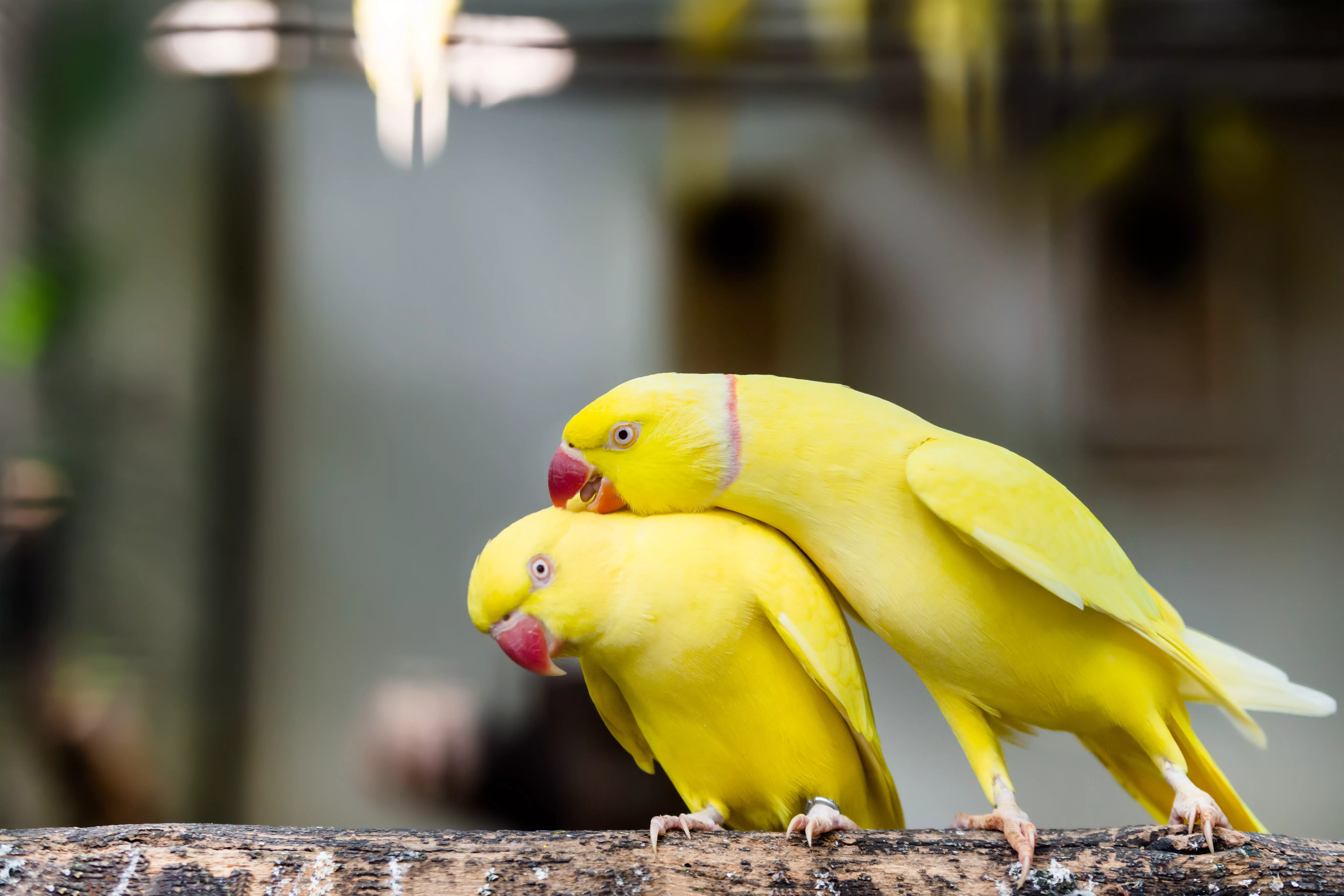
Wild Indian ringneck parakeets are normally mostly bright green with some blue tail feathers and yellow under their wings. Male ringnecks sport black and rose rings around their necks, as well as black facial markings.
However, selective breeding programs have given rise to a number of beautiful color mutations within the species. This has led to ringnecks whose dominant color is blue, yellow, or white, among other striking color combinations. In many places, the color-mutated birds have become even more popular than the green ringnecks.
Indian Ringneck Parakeets Are Excellent Talkers
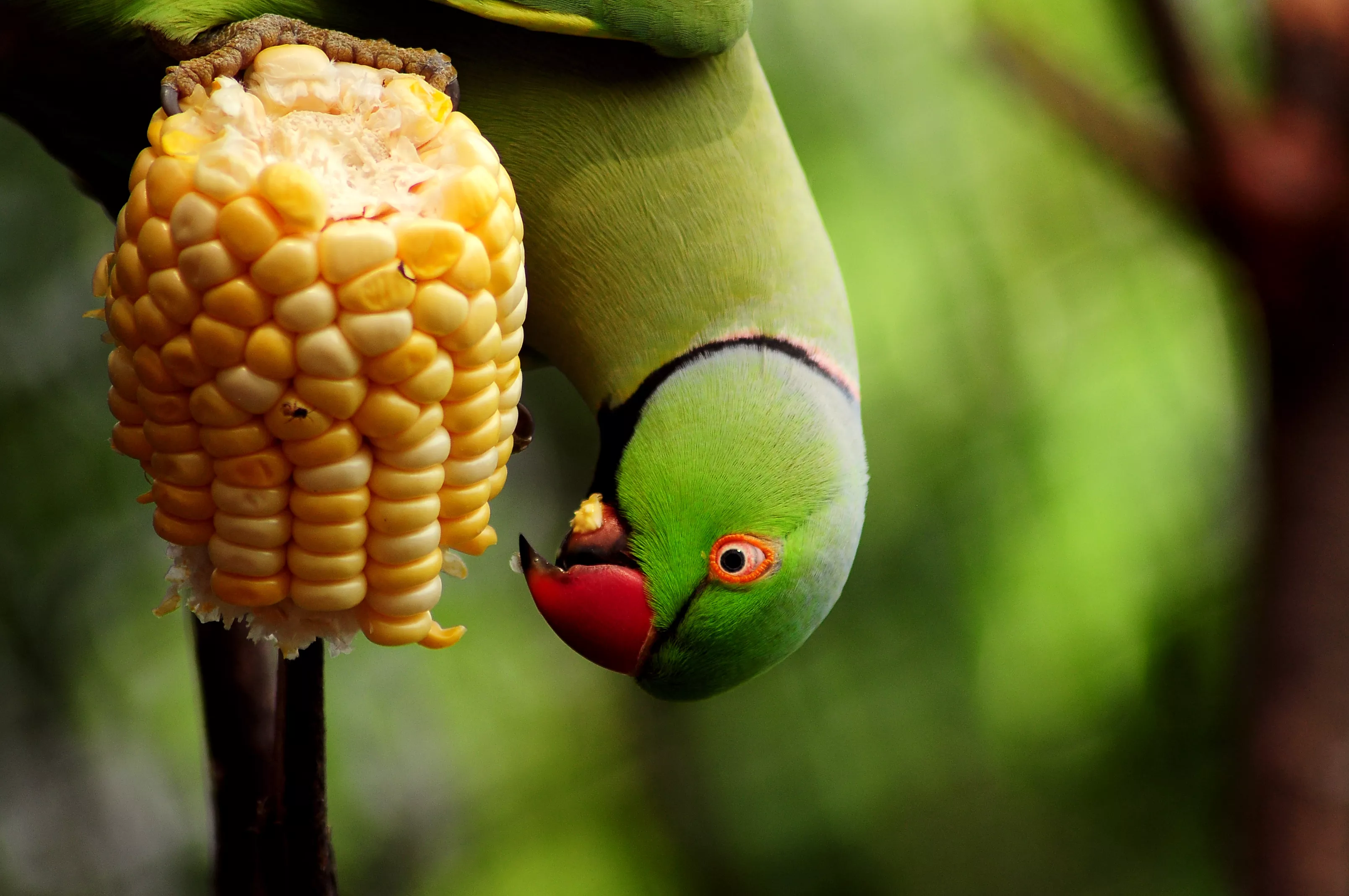
While it's never a sure thing that your bird will be able to learn to talk, opting to adopt an Indian ringneck parakeet will certainly up your chances. These birds are notorious talkers. In fact, they were once considered sacred in their native environment based on their remarkable ability to mimic human speech. Long ago, religious leaders in India observed the birds repeating prayers that were recited daily in the gardens surrounding their places of worship.
The clarity of their speech, along with their ability to learn dozens (if not hundreds) of words, continues to surprise people. Ringneck voices are one of the most charming among companion birds, as they tend to be comically high-pitched. They typically start talking between 8 months and 1 year old and are quick learners, especially if their humans spend quality time talking to them every day.