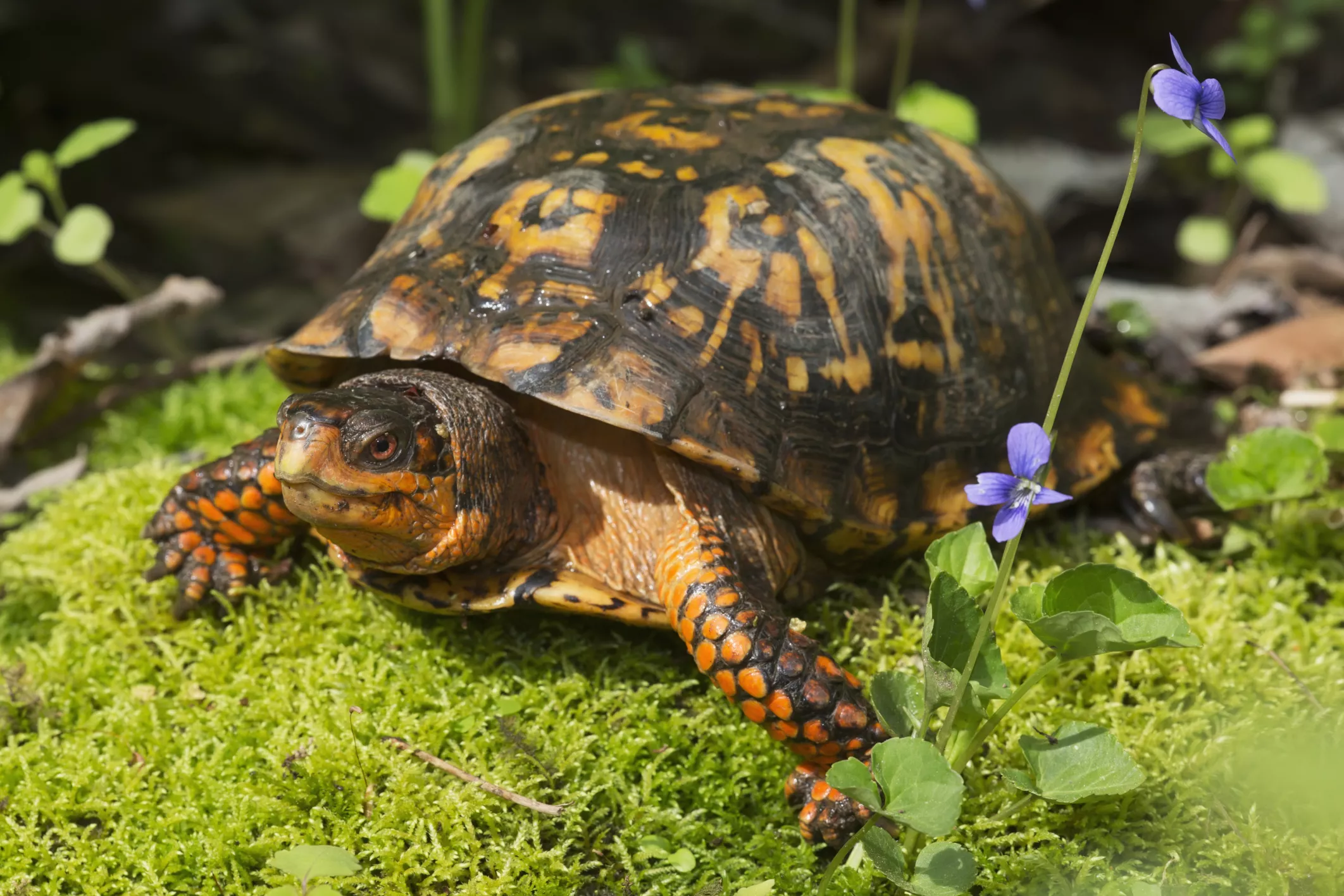
Key Takeaways Box turtles are omnivores, and their diet should include a balance of animal and plant-based foods tailored to their age.Maintaining a proper calcium-to-phosphorus ratio in their diet is essential to prevent metabolic bone disease.A variety of fresh fruits, vegetables, and insects, along with supplements, ensures a healthy and balanced diet.
Key Takeaways
Box turtles are omnivores, and their diet should include a balance of animal and plant-based foods tailored to their age.Maintaining a proper calcium-to-phosphorus ratio in their diet is essential to prevent metabolic bone disease.A variety of fresh fruits, vegetables, and insects, along with supplements, ensures a healthy and balanced diet.
If you've just brought home your first box turtle, you might be curious about their diet. Box turtles are omnivores, meaning they eat both animal and plant-based foods. The ratio of animal to plant-based foods varies based on the turtle's age and species. Typically, hatchlings and juveniles are more carnivorous, while adults prefer more plants.
Learn all about what box turtles eat so you can feed your pet the right diet for their unique needs.
How Often Do You Feed a Box Turtle?
An adult box turtle may eat every other day, while younger box turtles need to eat every day, and hatchlings need to eat two times a day. Talk to a veterinarian who can guide your individual turtle’s dietary needs, including how much they should be eating and how often they should be fed.
Importance of Calcium and Phosphorus Balance
Particular attention should be paid to the calcium and phosphorus balance in the items in the diet to prevent metabolic bone disease.1 Aim for at least a 1.5:1 ratio of calcium to phosphorus (2:1 is better). However, the importance of this ratio in each item is not as important as the overall balance.
Feeding a wide variety of items, with an emphasis on those items with a good calcium-to-phosphorus ratio, is the best way to maintain a healthy diet. Referring to a calcium-to-phosphorus ratio table of vegetables and fruits makes it easy to know what the ratios are in what you are feeding.
The items with a calcium greater than 1.0 are those which have a good ratio and should be emphasized in the diet. As an example, bananas (a favorite of many turtles) have a ratio of 0.3:1 (which is low) so this means they should be fed in moderation.
Vegetables and Fruits to Feed to Box Turtles
A wide variety of fruits and vegetables should be offered to your box turtle daily to provide a balanced diet. The following list is a variety of fruits and vegetables (listed in no particular order, along with their calcium-to-phosphorus ratio) that have good calcium-to-phosphorus ratios and are suitable for box turtles to have included in their diets.
Other vegetables and fruits are acceptable to include in the diet but should not make up the bulk of the daily meals.
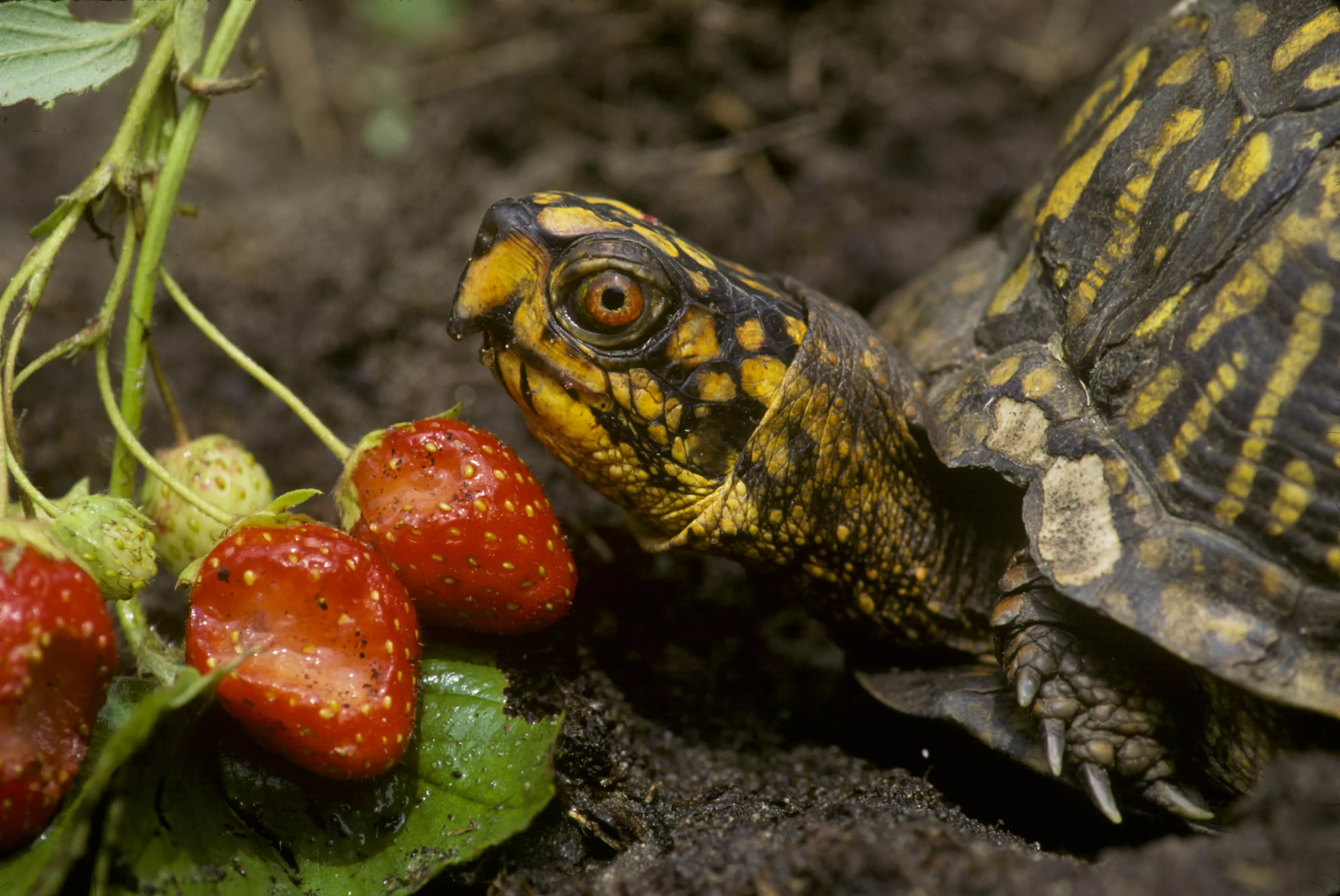
Animal-Based Protein to Feed Box Turtles
A variety of fresh and natural prey items are the best types of insects for your box turtle. These insects can be obtained from pet stores and bait shops.
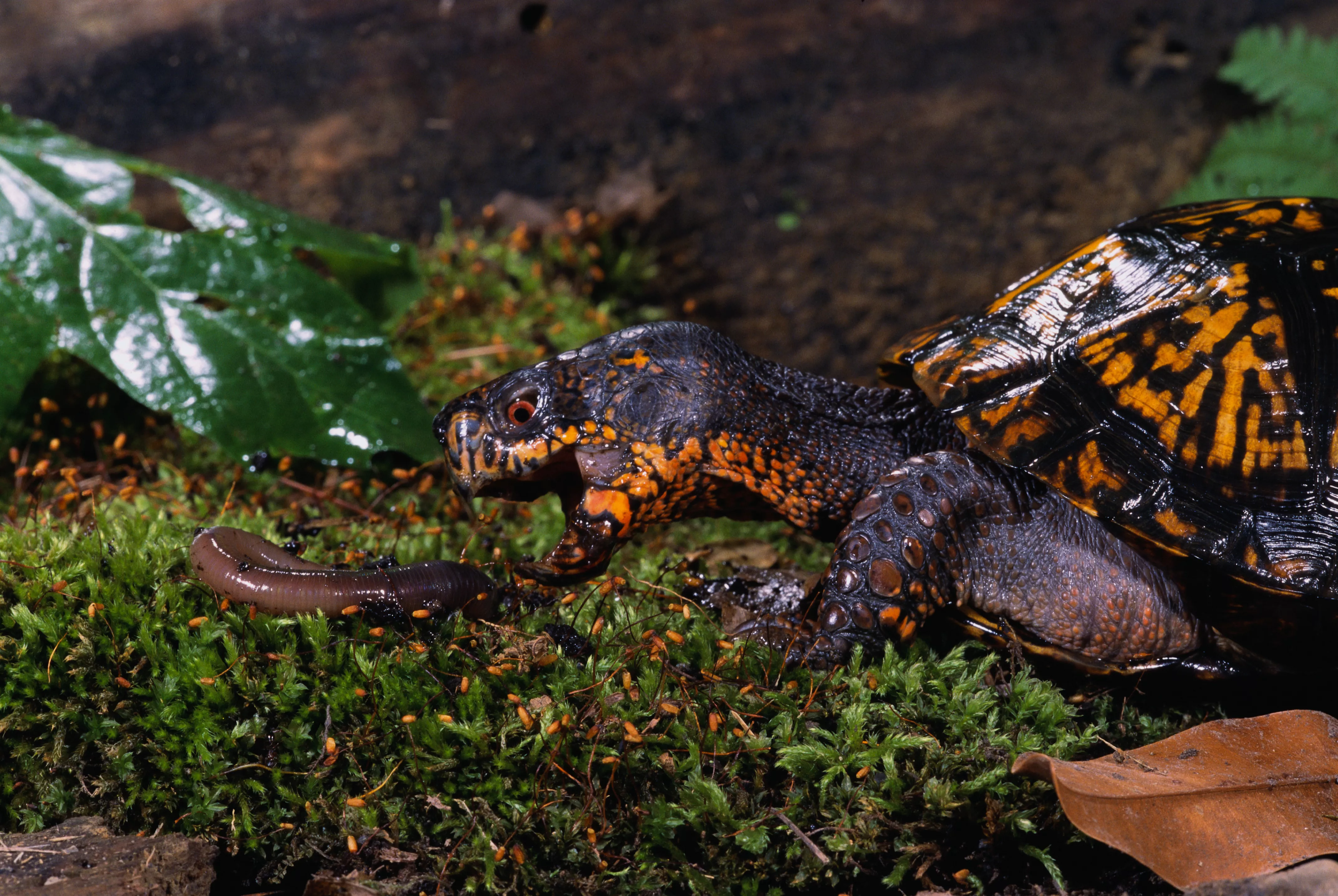
Other animal-based items can include:
Do Box Turtles Need Water?
Your box turtle should always have fresh, clean water that’s easy to access whenever they want to drink. They also like to soak in their water, so provide large, shallow dishes where they can safely drink and soak. Mist your turtle and their enclosure with water a few times every day.
Commercial Diets for Box Turtles
There are commercial box turtle diets available that are marketed as nutritionally complete, but you should also supplement them with a variety of fresh foods. A vet who specializes in turtles can help you find the right one.
Vitamin and Mineral Supplements for Box Turtles
The need for vitamins and supplements depends on the diet and housing of your box turtle (outdoors versus indoors). However, it is probably wise to dust the turtle food with a well-balanced reptile calcium and multivitamin supplement at least a couple of times a week.
Turtles kept outdoors under natural sunlight will produce their own vitamin D3 and won't need this vitamin supplement, but calcium is still beneficial to prevent metabolic bone disease if you are not providing a well-rounded diet.
Vitamin A deficiency is common in box turtles but providing a variety of fresh fruits and vegetables can help prevent this ailment. If you aren’t sure if your box turtle needs a vitamin or mineral supplement, talk to your vet.