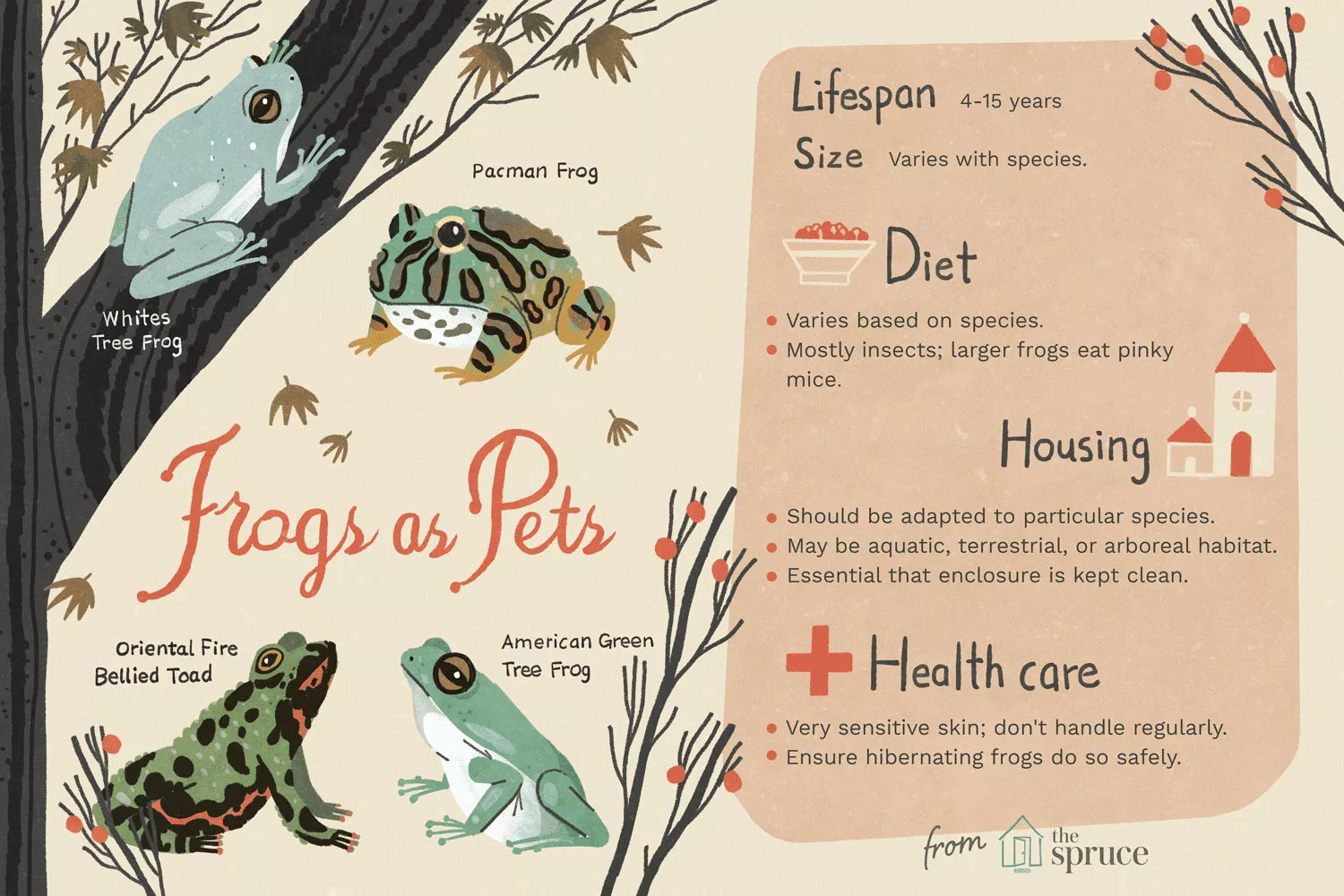
Key Takeaways Only purchase captive-bred frogs that are tested to be disease-free to help combat the amphibian extinction crisis.Frogs can be long-term pets, living between 4 to 15 years, and require specific environmental conditions.Common beginner-friendly frog species include Dwarf Clawed Frogs, White's Tree Frogs, and Pacman Frogs.
Key Takeaways
Only purchase captive-bred frogs that are tested to be disease-free to help combat the amphibian extinction crisis.Frogs can be long-term pets, living between 4 to 15 years, and require specific environmental conditions.Common beginner-friendly frog species include Dwarf Clawed Frogs, White's Tree Frogs, and Pacman Frogs.
Pet frogs can be a great choice for the right owner, but wild frog populations are declining and facing extinction mainly due to human actions. The pet trade may contribute to this crisis and the spread of Chytrid fungus, a harmful pathogen. Therefore, ensure any frog purchase is of locally captive-bred and disease-free frogs. Refrain from capturing wild frogs for pets.
Here’s everything to know about caring for pet frogs, including housing, diet, and which frog species are best for beginners.
Breed Overview Scientific Name: AnuraCommon Name: FrogAdult Size: 2 to 5-1/2 inchesLife Expectancy: 4-15 years
Breed Overview
Scientific Name: AnuraCommon Name: FrogAdult Size: 2 to 5-1/2 inchesLife Expectancy: 4-15 years
Caring for Pet Frogs
With proper care, pet frogs can live a long time, with life spans typically ranging from 4 to 15 years. Some frogs may even live longer, so be ready for a long-term commitment.
Some small frogs at pet stores grow into larger frogs. Their names often lead to confusion. For instance, "pixie" frogs, which seem small due to their name, are actually African bullfrogs, and can grow to 8 to 9 inches long. Their name comes from their Latin name, Pyxicephalus adspersus.
While pet frogs might seem dull, smaller frogs are often quite active. Larger frogs tend to be sedentary. Frogs should not be handled regularly because they have sensitive skin.
While frogs don't express themselves like humans or other animals, you can still form a bond with them. With proper care and daily attention, frogs may feel at ease and recognize you as a source of food and comfort.
If you frequently travel or leave town for several days, remember that finding someone to care for your frogs can be challenging.
Housing Frogs
Before bringing your frog home, set up their tank with appropriate water, humidity, and heat conditions. Some frogs hibernate, so you must provide specific conditions to help them do so safely.
Identify the type of tank your frog species requires (aquatic, terrestrial, arboreal, or semi-aquatic). A half-land, half-water setup can be tricky but common for many species.
Tank size depends on the frog species and the number of frogs you plan to keep. Generally, a frog needs a tank of at least 10 gallons, but White's tree frogs require a minimum of 20 gallons. Some species, like tree frogs, also need tall tanks for climbing. Research your chosen species to determine the right tank size and shape.
Maintaining a clean frog enclosure can be demanding. While frogs often have simple light, temperature, and humidity needs, they are highly sensitive to contaminants and waste.
Different species have different requirements for their tank or aquarium. For example, some tropical frogs need higher humidity levels above 70%, and some frogs need the temperature maintained at 75 to 85 F during the day and at or above 68 F at night. To mimic their natural environment, you’ll also need to provide lighting during the day. Include branches, plants, and hide boxes for your frog to use, too. And for the substrate, you could use coconut husks, sphagnum or peat moss, or soil, but don’t use any rocks or gravel that a frog might swallow.
How to Build a Frog-Friendly Pond
Food and Water
A frog's diet varies by species, but frogs are generally carnivores that eat live prey. Many consume worms or insects, like crickets, caterpillars, moths, and grasshoppers. Larger frogs may eat pinky mice. Purchase live prey from your local pet store, and feed only species-appropriate items, never human food.
Ensure fresh, clean water is always accessible to your frog.
Common Health Issues
Frogs can become ill for various reasons, such as:
The key to keeping frogs healthy is maintaining a clean tank and providing their needs. Observe your frog daily for any changes in appearance and behavior. Signs that require a visit to an amphibian veterinarian include:
Good Frog Species for Beginners
Like any pet, thoroughly research before choosing a frog type to ensure happiness for both you and your pet.