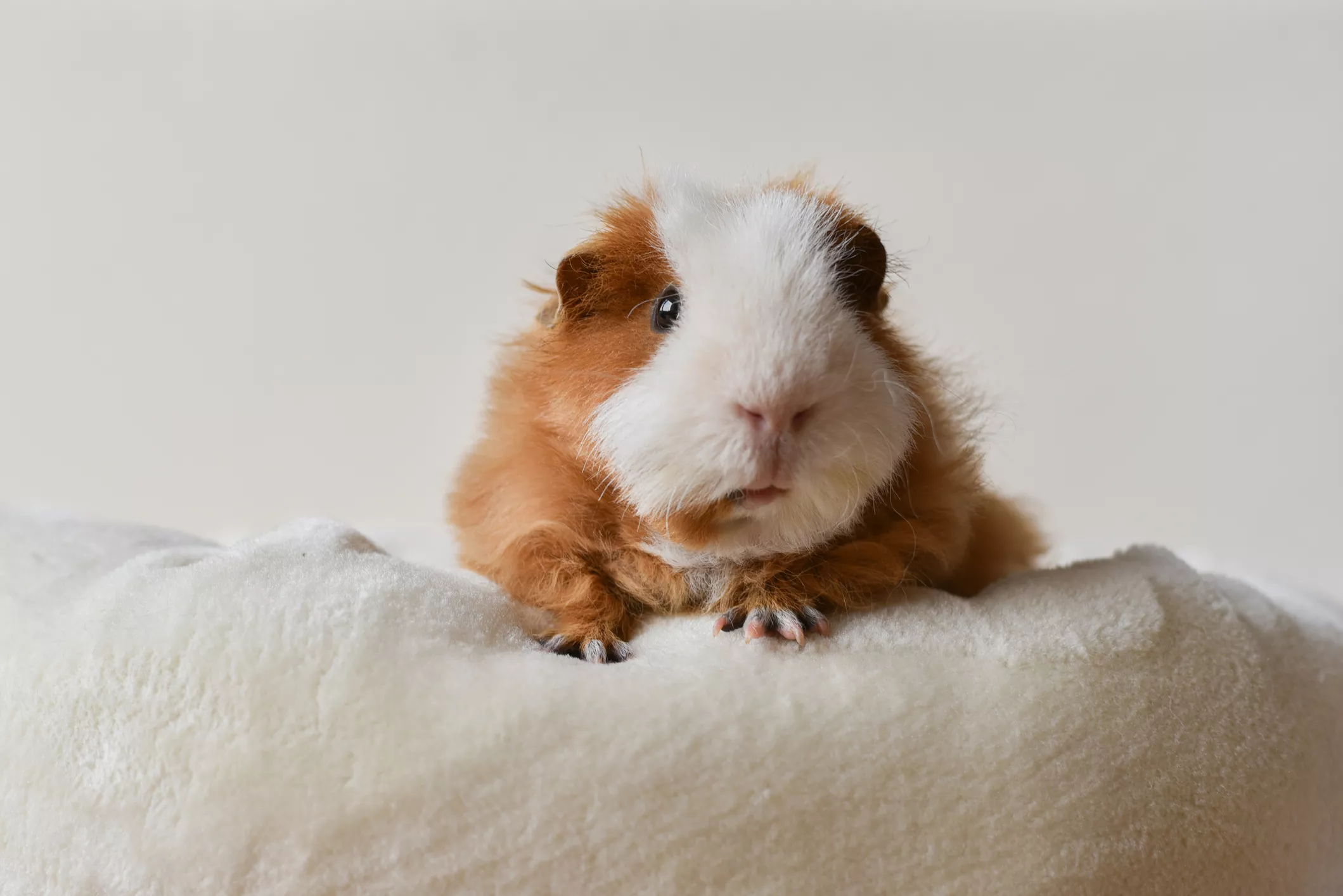
While there are two breeds of guinea pigs that are naturally not completely covered in fur, if they begin to experience hair loss, this is an indication of a problem. Hair loss can be localized or generalized, slow or sudden, and obvious or hidden. Knowing the causes of hair loss in guinea pigs can help you avoid it as well as help you know what you need to do to identify and treat it.
What Is Hair Loss?
Hair loss refers to a reduction in the normal amount of hair or fur on a guinea pig. It happens when hair falls out, resulting in a thin coat or bald patches on any part of the body. This condition is medically termed alopecia.
Symptoms of Hair Loss in Guinea Pigs
Hair loss in guinea pigs can be attributed to various causes, but the symptoms are generally apparent.
Symptoms Bald patches of skinThin hair coatExcess fur in the cageHeavy shedding when being pet
Symptoms
Bald patches of skinThin hair coatExcess fur in the cageHeavy shedding when being pet
If a guinea pig is losing hair, the first sign you may see is heavy shedding. When you are playing with, holding, and petting your guinea pig, more fur will be left on you and the ground than usual from your guinea pig. You may also see excessive amounts of fur in their cage. Eventually their hair coat won't be as thick as it used to be and you will see bald patches on the skin.
Causes of Hair Loss
Hair loss in guinea pigs can be self-induced or non-self-induced. Self-induced hair loss occurs when a guinea pig itches or chews its hair due to an underlying issue, while non-self-induced hair loss happens without such actions.
Diagnosing Hair Loss in Guinea Pigs
With numerous potential causes of hair loss, various diagnostic tests may be required to determine the underlying issue. Tests might include:
A complete history will be reviewed to assess if breeding, birth, hair trauma, or nutritional deficiencies are factors. If external parasites, ringworm, or bacterial infections are suspected, hair and skin tests are advised. Without signs of these issues, additional diagnostics like biopsies, bloodwork, X-rays, or ultrasounds might be required.
Treatment
Treatment for hair loss depends on its cause. Medications may be required to eliminate mites, lice, fungus, or bacteria, and to address Cushing's or hyperthyroidism. Environmental and dietary adjustments might also be necessary. If ovarian cysts are present, surgery could be needed. Among the listed causes, cutaneous lymphoma has the least favorable prognosis.
Prognosis for Guinea Pigs with Hair Loss
The prognosis for guinea pigs with hair loss is typically positive, contingent on obtaining a diagnosis and necessary treatments. Certain medications might be required long-term for severe underlying issues, while others are temporary until the cause is resolved. Hair loss related to pregnancy, for instance, often resolves independently, with an excellent prognosis.
Parasites and skin infections typically have short-term treatments. In contrast, conditions like Cushing's and hyperthyroidism may require lifelong medication or even radiation therapy or surgery. Hair loss due to ovarian cysts has a favorable prognosis post-surgery, and scurvy can be managed with dietary changes. Unfortunately, cutaneous lymphoma carries a poor prognosis but is less common than other causes.
How to Prevent Hair Loss
Simple preventive measures can help avoid hair loss in guinea pigs. Freezing hay, pellets, and bedding before use will eliminate mites and lice that cause itching and hair loss.
Quarantine new guinea pigs for four weeks before they interact with your current guinea pig to prevent the spread of any fungal or bacterial infections.
To help prevent scurvy, you can give guinea pig pellets that have vitamin C, but ensure that it is not older than 90 days past its manufacturing as this type of vitamin rapidly degrades.
Spaying female guinea pigs can prevent ovarian cysts, pregnancy, and postpartum hair loss.
Is Hair Loss Contagious to Other Animals?
Hair loss isn't contagious, but its causes can be. Ringworm and mites spread easily among animals, while lice specifically affect other guinea pigs. This underscores the importance of quarantining new guinea pigs before introducing them to your existing pets.
Is It Contagious to Humans?
Most hair loss causes aren't contagious to humans, although some are zoonotic, meaning they transmit from animals to humans. Ringworm, a fungal infection, is a zoonotic cause of hair loss, easily spreading to humans. Another zoonotic cause is the mite Trixacarus caviae, responsible for sarcoptic mange.