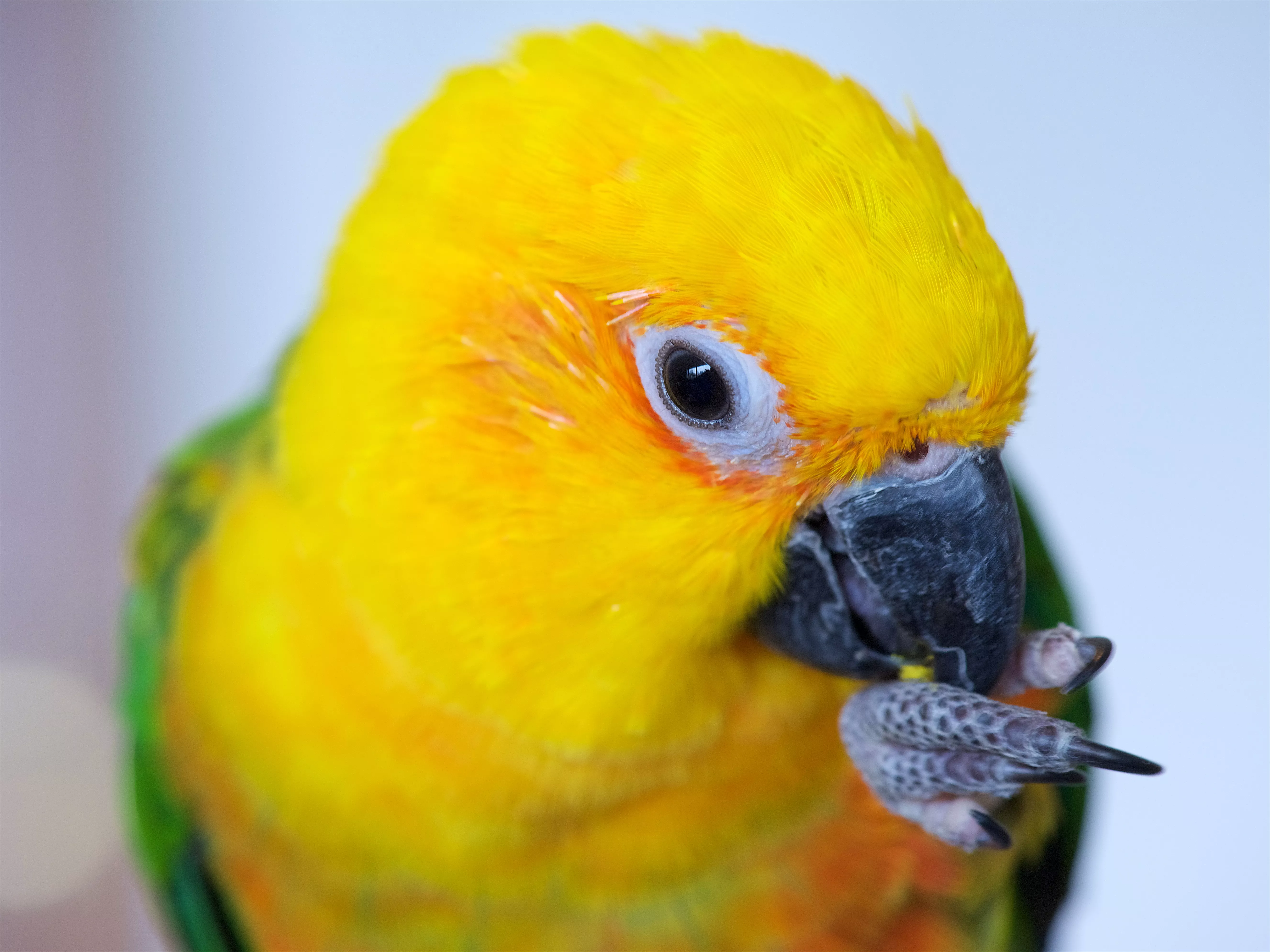
Smart, energetic, and loving small parrots, jenday conures are ideal pets for owners who can spend time socializing with them. These colorful and intelligent birds have been popular pets for many years and are suitable for families with children. If you're looking for a big bird personality in a compact size, this colorful and friendly species may be a good fit.
Species Overview Common Names: Jenday conure, jandaya parakeet, yellow-headed conure, flaming parakeetScientific Name: Aratinga jandayaAdult Size: 12 inchesLife Expectancy: More than 30 years
Species Overview
Common Names: Jenday conure, jandaya parakeet, yellow-headed conure, flaming parakeetScientific Name: Aratinga jandayaAdult Size: 12 inchesLife Expectancy: More than 30 years
Origin and History
The jenday conure is native to the woodlands, palm groves, and dense vegetation of northeastern Brazil. They prefer nesting high in tree hollows and typically travel in small flocks of around 30 birds.
The term "jenday" originates from Old Tupi, an indigenous language in Brazil, meaning "small parrot." Jenday conures are a protected species; capturing and trading them is prohibited.
Temperament
Naturally playful and affectionate, jenday conures make loyal companion birds. While some may become attached to a single person, most do well with a family and accept everyone as part of their flock.
Jendays are very cuddly, often enjoying a ride on their handler's shoulder or inside their shirt. They usually love to be petted and will bow their heads when seeking affection.
Many admire the jenday conure's beauty and charming personality. These social birds thrive on interaction and may not suit those unable to spend several hours daily with them.
Jenday conures are as intelligent as other members of the parrot family and can learn simple tricks and mimic sounds.
Speech and Vocalizations
Conures mimic human speech like larger parrots, but most jendays don't usually "speak." However, they are entertaining and often learn to repeat household sounds like telephones and microwaves.
Flocks of flying jenday conures are loud, often calling out in flight. Many conures scream when feeling neglected. In close living quarters, they may be considered a noisy nuisance.
How to Teach Your Pet Bird to Talk
Jenday Conure Colors and Markings
Jenday conures feature multi-colored plumage with a red-orange body, green wings, and back. Their tails have blue feathers, and the wings are edged with iridescent blue. Also known as yellow-headed conures, they have yellow heads with orange facial patches.
Jendays have black beaks and gray feet and legs. They are a monomorphic species, meaning DNA or surgical sexing is required to distinguish genders. Females have light brown irises and a gray eye-ring, while males have darker brown irises and a white eye-ring. However, these distinctions are insufficient for sexing.
Jenday conures closely resemble sun conures in size and appearance. However, jendays have green wings compared to the primarily yellow wings of sun conures.
Caring for Jenday Conures
To keep your bird happy and calm, plan to spend plenty of time with your birds. It's essential that the bird doesn't get bored or lonely; this can lead to destructive chewing and naughty behavior.
Though small enough to fit in a cockatiel cage, jenday conures require more space. Their cage should allow them to flap their wings and move freely, ideally with the ability to fly in its cage. These active birds get cranky in confined spaces. The minimum dimensions should be 3 feet long, 2 feet wide, and 2 feet tall. If housing a pair, double the cage size.
Jenday conure pairs maintain their affectionate, well-trained nature if both receive proper attention. They can cohabitate with other conures, such as sun, gold-capped, and blue-crowned conures. Although different conure species can interbreed, hybridization depletes the limited gene pool and is not recommended. A sun conure and jenday hybrid is known as a "sunday."
Top 15 Small-to-Medium Birds That Can Talk
Common Health Problems
Jenday conures are hardy birds that adapt well to home life. However, they are susceptible to several diseases:
Signs of illness in these birds include lethargy, loss of appetite, breathing difficulties, and feather loss or plucking. Many of these conditions are treatable. Consult an avian veterinarian if these signs appear.
Diet and Nutrition
Pet birds are more likely to meet their nutritional needs with a varied diet.
In the wild, jenday conures mainly eat fruits, nuts, and seeds. In captivity, they require a balanced, pelleted diet supplemented with nuts, seeds, and fresh fruit and vegetables. Provide unlimited pellet food; they eat only what they need. Offer 1/8 to 1/4 cup of fresh fruits and vegetables in the morning and evening. Use seeds and nuts as occasional treats.
Thoroughly clean their food bowls and cage regularly to prevent parasitic infections. Conures are very active, so obesity is usually a lesser concern compared to other pet parrots.
Seeds vs. Pellets: What to Feed Your Bird
Exercise
Like other conures, jendays need adequate space to fly, explore, and play. Provide at least two hours outside the cage daily. Birds can learn to use a play stand with ropes, toys, and bird-safe trinkets. Ensure out-of-cage time is in an area without hazards like pets, ceiling fans, or open doors/windows to prevent escapes.
Inside the cage, provide activities like swings, which these small parrots will quickly adopt as their roost. Ladders, bells, and ropes create a jungle gym experience.
Provide chew toys; as voracious chewers, jenday conures need items to exercise their beaks. Regularly rotate wood toys and branches to maintain their interest.
Where to Adopt or Buy a Jenday Conure
Before adopting a jenday, consult local wildlife and game authorities for legal restrictions. Some areas require permits or may ban them. For instance, it's illegal to own one in New Jersey, USA.
When choosing a bird, it is best to select a hand-fed baby or at least a young bird that has been handled regularly. The average cost for one of these birds is $600.
Choose a bird that is bright, alert, and active. Avoid birds sitting quietly with puffed feathers, as they might be ill. Feathers should be smooth, shiny, and lie flat. Ensure feathers around the vent/cloaca (opening where birds expel feces and urine) are clean and dry. Foot scales should be smooth, nails in good condition, beak smooth and well-shaped, and nostrils clear and clean.
Online rescues, adoption organizations, and breeders for jenday conures include:
More Pet Bird Species and Further Research
If you're interested in similar species, consider:
If you're interested in birds with mimicry talent, consider small talking birds that might suit you.