
Key Takeaways Pet rats are social creatures and should be kept in same-sex pairs or groups to thrive.An appropriate cage should be at least 2 feet by 2 feet by 2 feet for two rats, with a solid base and multiple levels.Rats can carry diseases that may be transmitted to humans, so choosing a healthy rat and maintaining cleanliness is crucial.
Key Takeaways
Pet rats are social creatures and should be kept in same-sex pairs or groups to thrive.An appropriate cage should be at least 2 feet by 2 feet by 2 feet for two rats, with a solid base and multiple levels.Rats can carry diseases that may be transmitted to humans, so choosing a healthy rat and maintaining cleanliness is crucial.
Rats often have a reputation as pests, but they are intelligent and social animals. Pet rats are easy to care for but are not low-maintenance. They need significant attention and exercise outside their cages—ideally, at least one hour per day. They tame easily, which is ideal for owners who enjoy handling their pets.
Discover more about pet rats and how to ensure their well-being.
Pet Rat Facts
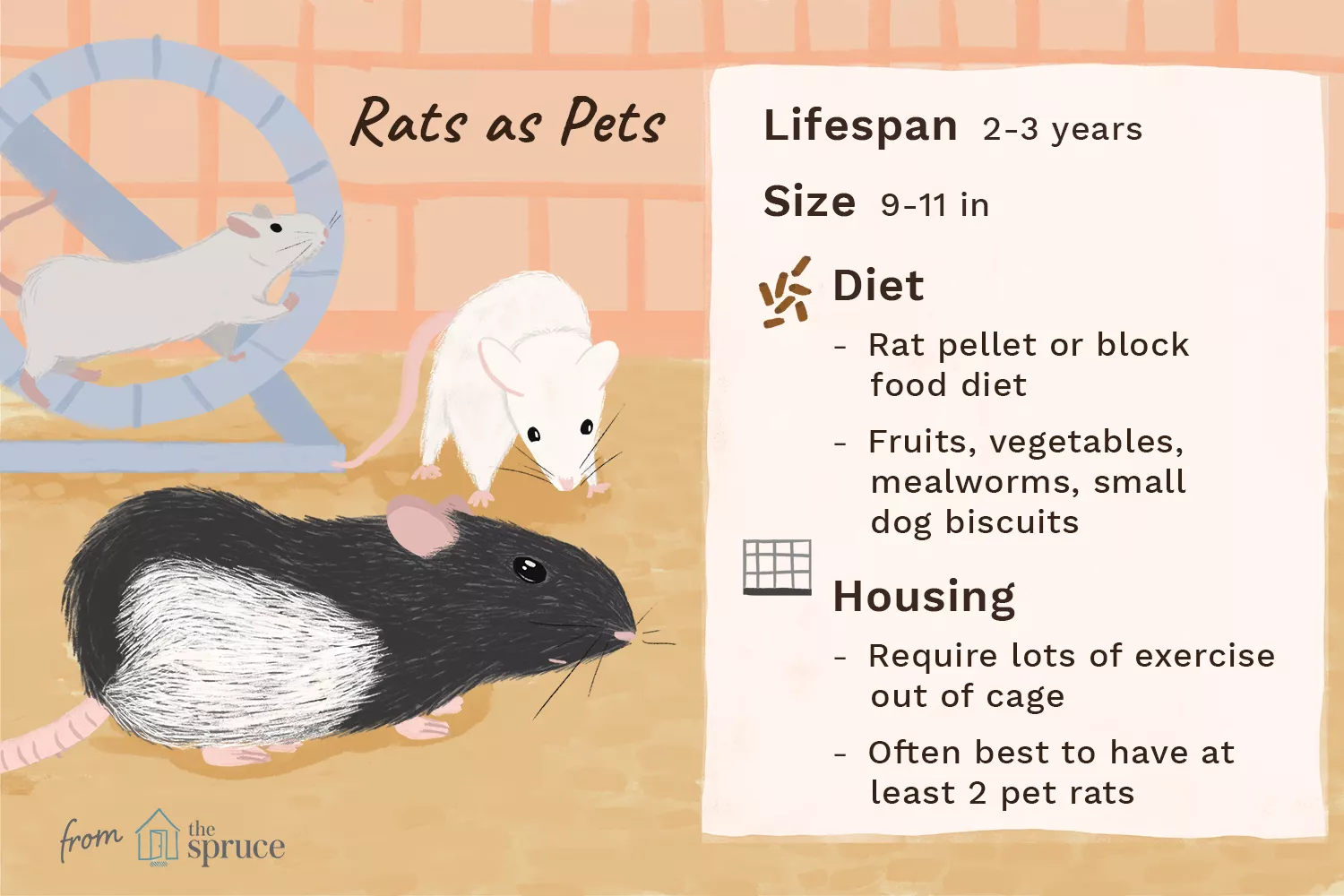
Rats as Pets
Since rats are very social they should never be kept alone. Same-sex pairs or groups are ideal. Males usually get along fine with other males, especially if introduced at a young age or if they are littermates.
Keeping rats in groups does not complicate taming if handled from a young age. The bond with your pets remains strong, even with several. Many owners appreciate their pets' curiosity and often compare a rat's companionship to that of a dog.
Rats need spacious enclosures, ideally a multi-level wire cage with a solid base. A minimum size of 2 feet by 2 feet by 2 feet suits two rats, providing ample space to play and exercise. Line the cage with a safe substrate, like aspen bedding, and ensure they have a food dish and water bottle. Also, include various toys and hiding places.
Where to Get a Pet Rat
There are several options for acquiring a new pet rat. Although pet stores are an obvious choice, ensure the staff is knowledgeable about rat care. The animals should be kept in clean, appropriate housing, receive a good diet, and be handled regularly. Additionally, ensure that stores house males and females separately to prevent unexpected litters.
Breeders, known as ratteries, are ideal for sourcing well-socialized young rats. They ensure early socialization and handling. Breeders are also likely your best option if seeking specific coat types or unique rat colors.
Consider animal shelters if you're looking to rescue a rat in need. Check local shelters or seek rat-specific rescue groups. Choose a rat with a good temperament, remembering that rescued rats may initially be skittish or shy. With patience, this shyness is often overcome.
Regardless of the source, avoid aggressive rats, as this trait is difficult to overcome and most rats are naturally non-aggressive.
Choosing a Pet Rat
Avoid selecting rats that are panicky when handled, especially if they don't calm down quickly. Also, steer clear of rats that are overly quiet and calm, as they may be ill. Ideally, choose a rat curious enough to approach you.
Rats can carry diseases transferable to humans, like rat bite fever, ringworm, and leptospirosis. It's essential to choose a healthy rat and maintain their health at home.
Rats should appear alert and active. Look for these traits:
By being observant in your selection, you'll enjoy a satisfying companionship and a few years of fun with your new pet rat.
Top 100 Pet Mouse Names: Classic, Cute, and Quirky Choices