Key Takeaways Tank Size: Ensure the tank is at least 10 gallons per inch of turtle, with a minimum of 20 gallons for hatchlings.Basking and Heat: Provide a basking area and maintain temperatures of 74-78F for water and 90-95F for the basking spot.Water Cleanliness: Use a good quality filter at double the tank size rating and perform 25% water changes weekly.
Key Takeaways
Tank Size: Ensure the tank is at least 10 gallons per inch of turtle, with a minimum of 20 gallons for hatchlings.Basking and Heat: Provide a basking area and maintain temperatures of 74-78F for water and 90-95F for the basking spot.Water Cleanliness: Use a good quality filter at double the tank size rating and perform 25% water changes weekly.
Red-eared slider turtles are semi-aquatic reptiles, which means they spend much of their time in water but also spend significant time basking in the sun. While basking may appear like lounging, it's crucial for their health.
Red-eared sliders, when kept as pets, require turtle tanks large enough for swimming and a basking area to dry off and enjoy sunlight. With proper care and the right tank setup, they can live over 30 years and make entertaining pets.
Essential Care Tips for Your Pet Aquatic Turtles
Before You Begin
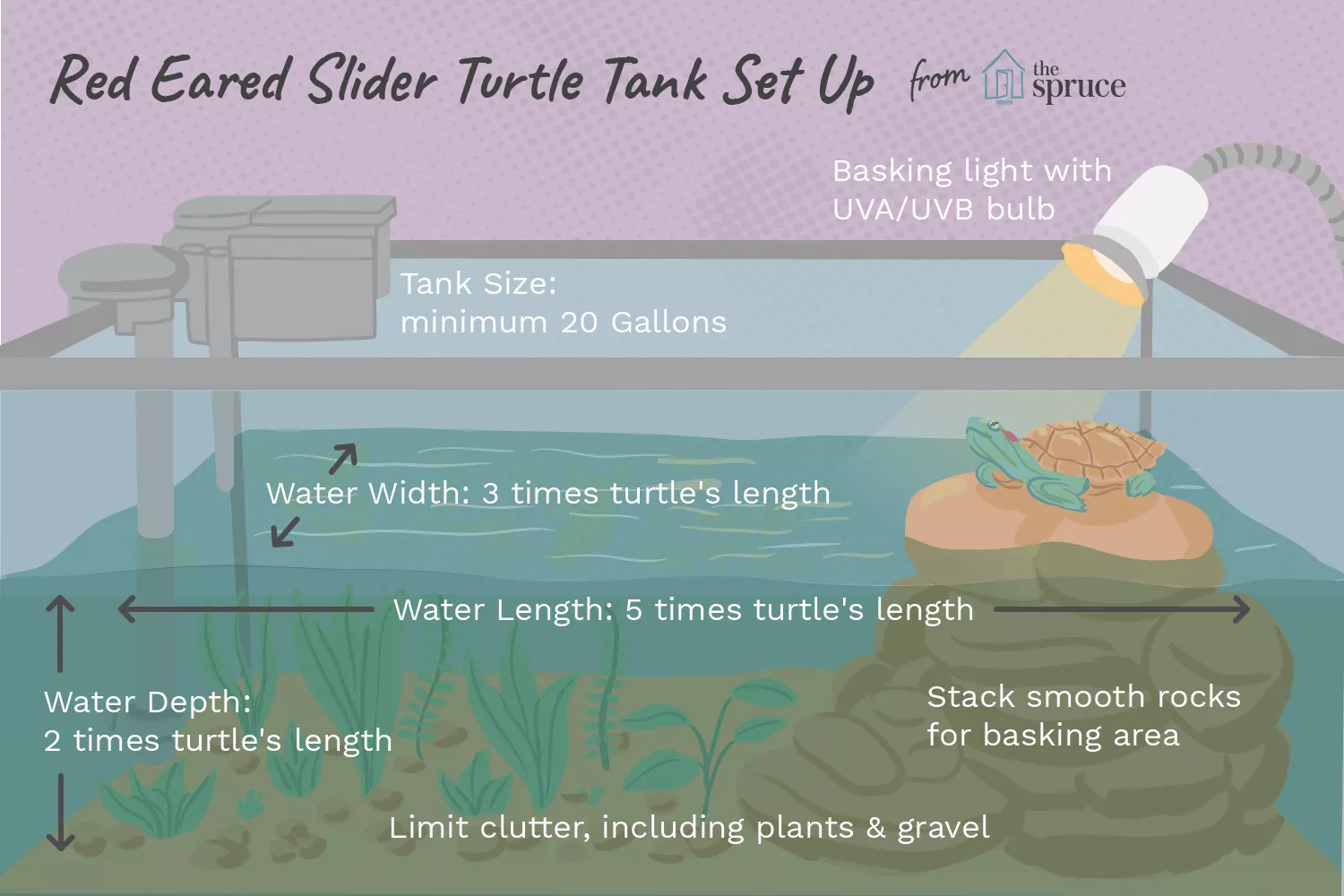
As a guideline, allocate 10 gallons of water per inch of your turtle, with a minimum of 20 gallons for hatchlings. Remember, red-eared sliders can reach 10 to 12 inches as adults, requiring a significantly larger tank.
What You Need
To set up your red-eared slider's tank, you'll need:
Large plastic containers or storage tubs are good alternatives to aquariums as long as you don't mind being unable to view the turtles from the side. You won't need a lid if the container is tall enough and the basking area is positioned so that the turtles can't climb out.
Fill the Tank With Water
Red-eared sliders require sufficient water to swim. As a minimum, the water depth should be double the turtle's length; for example, a 4-inch turtle needs at least 8 inches of water
These turtles are strong swimmers, so there's no drowning risk if they can exit the water and avoid areas where they might get trapped.
Create a Basking Area
The basking area for your turtle can be provided by stacking smooth rocks and sloping large smooth gravel to one side to make a land area. You could also use wood or a plastic "turtle dock." Whatever you choose to construct a basking spot, make sure your turtle can climb onto it easily and that it allows your turtle to completely dry off.
Add Tank Decorations
When designing a tank, it's a good idea to keep it uncluttered and easy to clean. Remember that turtles can knock things over and push stuff around. Plants may be a nice aesthetic touch, but turtles are likely to make a snack of them or uproot them. Plastic plants will likely be dug up and just make cleaning more difficult.
The best tank accessories for a red-eared slider are larger rocks and stones, and driftwood. If using driftwood, make sure to purchase it from a pet supplies store rather than using the driftwood you find on the beach. The kind sold in the store is parasite-free and will not harm your turtle.
Maintain Tank Heat
The water in a red-eared slider turtle tank should be kept at about 74–78 degrees Fahrenheit, and up to 80 degrees for hatchlings. The daytime ambient air temperature in the tank should be between 75 and 80 degrees Fahrenheit, with a basking spot between 90 and 95 degrees over the land area of the tank. The basking spot lighting can be turned off at night and the air temperature can drop down to as low as 60.
A submersible aquarium water heater can be used to keep the water warm if necessary. Glass aquarium heaters may become damaged by large turtles and could cause a potentially lethal situation if they heat up the water too much.
You can protect the heater so the turtles can't bump it by placing it behind something (a brick is one idea) or by fashioning some sort of cover (a piece of PVC pipe could be used). Be sure to install a good aquarium thermometer and monitor the water temperature.
Provide a reptile heat lamp over the basking area to keep your turtle warm when it gets out of the water. A reptile bulb/heat lamp in a reflective lamp can serve this purpose, but make sure there's no way the turtle can touch the light or that the light can fall into the water. Use a thermometer to check the surface of the basking site to be sure it is reaching the correct temperature. The basking light will help heat the air in the tank as well.
Install an Ultraviolet Light
In addition to the basking light for heat, provide a full spectrum reptile Ultraviolet (UVA/UVB) light. Exposure to UVA/UVB is necessary for proper calcium metabolism and also appears to have other benefits to overall health, such as improving appetite. It is also nice to take your turtle out into the natural sunlight in warmer weather if you can. Just be sure it can't escape or become overheated when in the sun!
Get a proper reptile UVA/UVB bulb and follow the manufacturer's guide regarding the placement of the bulb. UV rays diminish with distance from the bulb, so it's important to place the bulb where the turtle can be close to benefit best. Replace the bulb as recommended by the manufacturer since the intensity of UV produced diminishes over time. If your turtle lives outside, this light is not necessary.
Cleaning the Tank
Between feeding and defecating, turtles are pretty messy creatures. Your turtle tank should include a good filtration system such as a power filter or canister filter to keep the water clean. Choose a filter rated for at least double the volume of water you will be filtering since turtles are such messy pets. Filtration will reduce the frequency of water changes but your turtles will still require 25% water changes weekly and a thorough cleaning once a month or more.
Preventing Problems During Tank Setup
Avoiding common problems during tank setup will help your turtle stay healthy and prevent issues in the future.
Optimal Red-Eared Slider Diet: Feeding Your Turtle Right