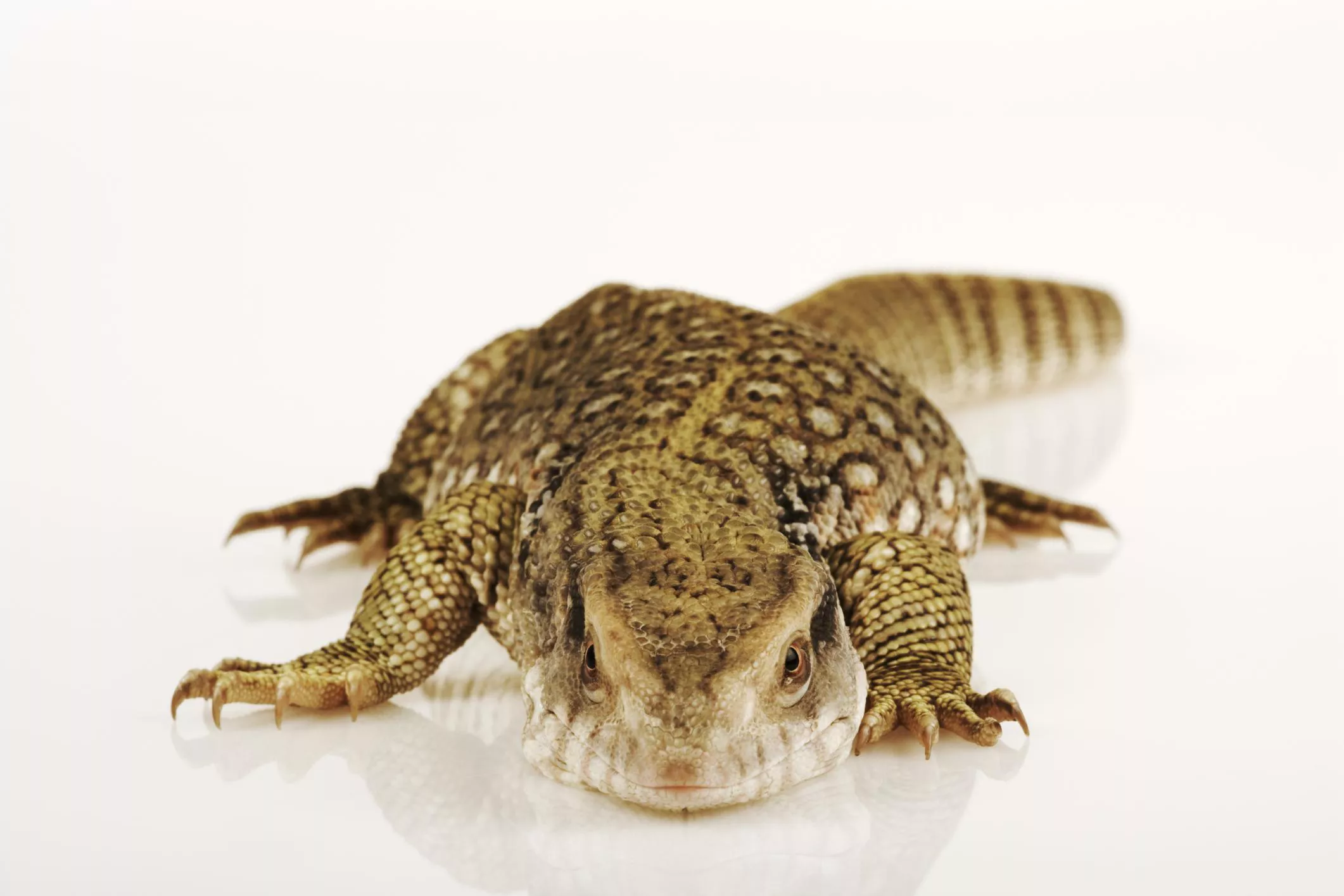
Savannah monitors are relatively small and docile among monitor lizards often kept as pets. Their care requirements are best suited for experienced owners.
Savannah monitors are popular pets in the United States but do not always thrive in captivity. These lizards are not ideal for amateur reptile enthusiasts; they require stringent care to remain healthy.
Learn about the savannah monitor's temperament, housing requirements, care needs, and more.
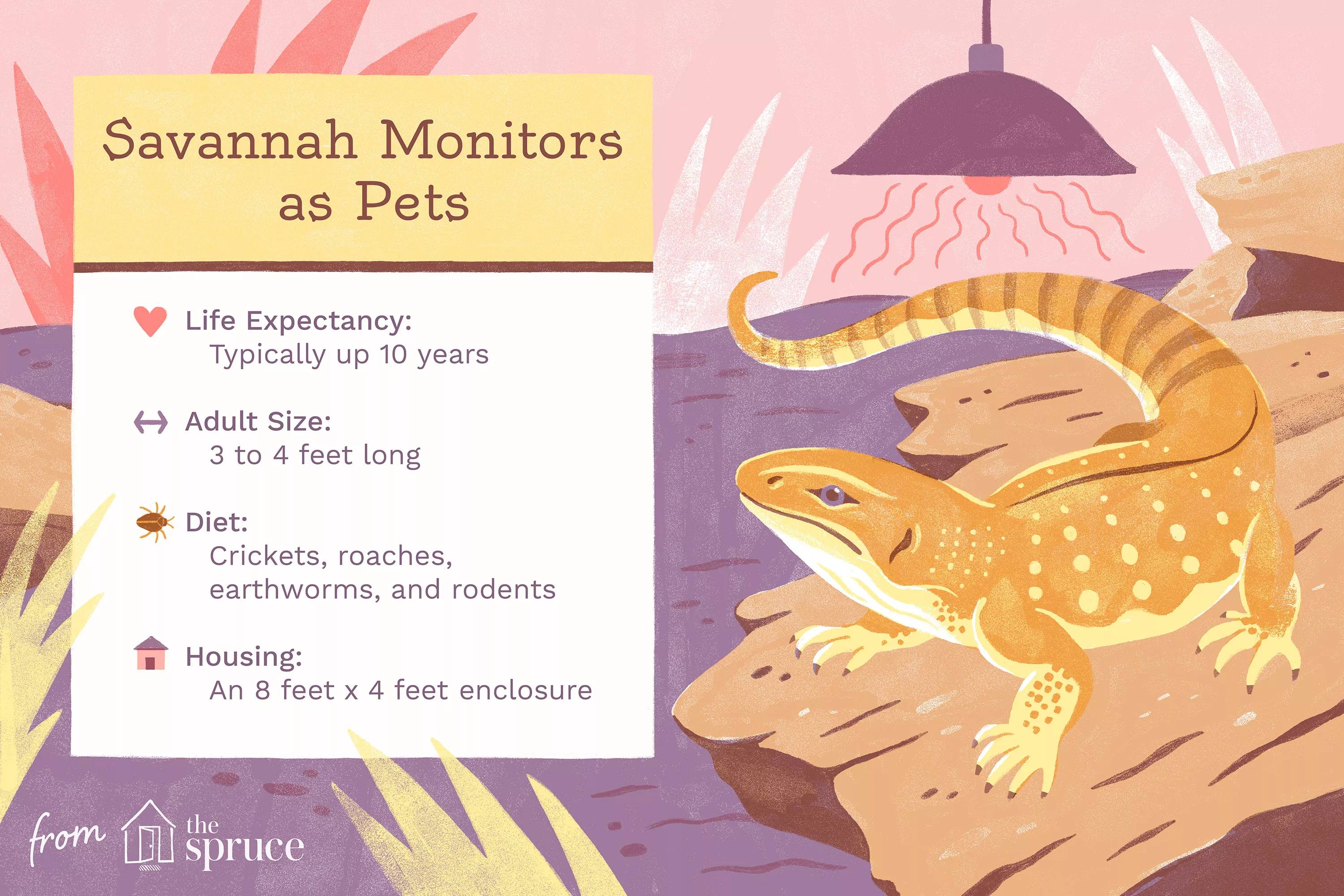
Species Overview Names: Savannah monitor, Bosc monitorScientific Name: Varanus exanthematicusAdult Size: 3 to 4 feet longLife Expectancy: 10 years average; some may live up to 15 years
Species Overview
Names: Savannah monitor, Bosc monitorScientific Name: Varanus exanthematicusAdult Size: 3 to 4 feet longLife Expectancy: 10 years average; some may live up to 15 years
Savannah Monitor Behavior and Temperament
Savannah monitors spend much of their time basking in the sun, burrowing in the soil, and consuming various small prey, including rodents, smaller lizards, and insects.
Regular handling from an early age results in a tame and docile creature. However, like all monitors, if not captive-bred or handled frequently, Savannah monitors may become aggressive and bite. While their teeth are small, they are sharp, their claws can scratch, and they can use their long, heavy tails as a whip for defense.
This species requires a large cage setup and strict environmental control—their care is comprehensive and not recommended for beginners.
Housing the Savannah Monitor
Savannah monitors are strong and known for being escape artists. Ensure the enclosure is fully enclosed and has a secure lock.
A hatchling or juvenile Savannah monitor will live comfortably in a 55-gallon aquarium for about six months, but they grow quickly. Most owners have their adult setup ready when bringing home a baby. The enclosure should be at least twice the lizard's length at adulthood. An adult requires an enclosure 8 feet long by 4 feet wide and at least 3 feet high.
The height of the enclosure should prevent your Savannah monitor from escaping and provide space for a branch or other decoration in the enclosure in case they want to climb. Monitors can be destructive, so provide only rocks and hides; decorations aren't necessary. Their claws can shred screen-sided enclosures, so glass or Plexiglas siding is ideal. Plan for mounting lights and heat sources above the enclosure.
Provide a large water dish (a cat litter box can be an alternative) that allows the monitor to submerge their entire body.
Spot-clean feces every day from the enclosure, especially if it's in their water. Thoroughly clean the entire enclosure every two weeks and find a safe place to house your lizard during cleaning. Some owners use a hard plastic pet carrier or the bathtub.
Heat
Maintain an average enclosure temperature of 95°F to 100°F with a basking spot between 110°F and 130°F. As cold-blooded creatures, reptiles regulate their body temperature externally. The enclosure needs a gradient down to 85°F during the day and as low as 75°F at night. Use ceramic heat emitters instead of lights for nighttime temperature maintenance.
Light
UVB lighting is essential for most lizards, including Savannah monitors. Use a high-percentage UVB output bulb (8-10%) for a 10 to 12-hour daily cycle to mimic sunlight. Replace bulbs every six months, even if they remain lit, as the UVB emissions cease after this time.
Humidity
Native to Africa, Savannah monitors were historically kept in captivity in dry, hot environments resembling their natural habitats. However, recent practices show better results with higher humidity and burrowing areas.
Use a hygrometer inside the enclosure to accurately monitor humidity levels. Create a substrate gradient with nearly 100% humidity, and maintain above 60% in the coolest part of the enclosure. The basking area will likely remain moisture-free.
Substrate
Reptile owners often use substrate or bedding to line the bottom of an enclosure. Savannah monitors, being diggers, will appreciate substrate for burrowing.
Savannah monitors are voracious eaters and may ingest substrate with prey items. Choose bedding that won't cause impaction or block the digestive tract. Small substrates like calcium sand are semi-digestible in tiny amounts.
Opt for easily cleaned and changed flat bedding options like paper towels, butcher paper, towels, reptile-safe carpet, and felt for messy or aggressive lizards. If your Savannah monitor is tame, consider natural bedding like sand, organic soil, or a mix of both, ensuring they can burrow at least 24 inches deep. Change used or soiled substrate regularly, at least every two weeks.
Black Throated Monitor Species Profile
Food and Water
Savannah monitors are carnivores and opportunistic eaters prone to obesity, so monitor their weight to prevent excessive gain. Feed juveniles three times a week, whereas adults may only need feeding once a week. Feeding them on a schedule can help establish a routine if you prefer.
The feeding amount depends on the size of your lizard. On average, juveniles (up to 3 feet long) should consume one to four fuzzy mice or one small mouse, supplemented with several insects. Adults (larger than 3 feet long) should eat two to three adult mice per week or one rat, also supplemented with some insects.
Feed savannahs gut-loaded insects, such as crickets, roaches, and earthworms. Gut-loading involves feeding nutritious food to prey, allowing those nutrients to pass on to the lizard.
Dust calcium powder onto insects and young rodents lacking bone density. Provide low-fat, high-quality (grain-free) canned dog or monitor food only occasionally, as excess protein can cause gout.
If concerned about impaction from substrate ingestion during feeding, do not feed your Savannah monitor in their enclosure. Use a separate, plain-bottomed tank for feeding—this also helps keep the primary enclosure clean.
Never hand-feed Savannah monitors, as they may mistake your fingers for food. Avoid having your lizard associate your hand with a treat.
Change and clean the water container daily, replenishing it with filtered water.
Common Health Problems
Common health issues in Savannah monitors can be treated by an exotics veterinarian. Potential health problems include:
Choosing Your Savannah Monitor
When buying your savannah monitor, look for one that has been "ranched," meaning they were bred in a native but controlled environment, or get one from a reputable breeder. Although the IUCN lists the savannah monitor as least concern, it's important to purchase from a breeder, as it ensures your pet wasn’t taken from the wild. Attend local reptile shows or expos to meet breeders and shop for lizards and supplies while there. They can cost from $25 to $100.
If you are experienced with reptiles, consider inquiring at reptile rescues or adoption centers for Savannah monitors. Many inexperienced owners surrender these animals once they reach adult size and become harder to manage. Keep in mind that many surrendered pets may not be hand-tamed, may be stressed, and may need rehabilitation from neglect.
Signs of a healthy Savannah monitor include smooth, even skin with no traces of mites (small, reddish-brown spots around the face), clear, bright eyes, a rounded, full body, and a strong, even jawline.
Different Species of Monitors
If you're interested in other lizards similar to the Savannah monitor, consider:
You also can check out all of our other monitor lizard articles.