Key Takeaways Senegal chameleons are beautiful but fragile and not suitable for novice lizard owners due to their need for specific environmental conditions and handling requirements.Proper housing includes a mesh or screened enclosure with plenty of climbing opportunities, adequate lighting, and a maintained high humidity level to ensure the chameleon's health.A balanced diet consisting of gut-loaded insects dusted with calcium powder and regular veterinary checks for parasites is crucial for their well-being.
Key Takeaways
Senegal chameleons are beautiful but fragile and not suitable for novice lizard owners due to their need for specific environmental conditions and handling requirements.Proper housing includes a mesh or screened enclosure with plenty of climbing opportunities, adequate lighting, and a maintained high humidity level to ensure the chameleon's health.A balanced diet consisting of gut-loaded insects dusted with calcium powder and regular veterinary checks for parasites is crucial for their well-being.
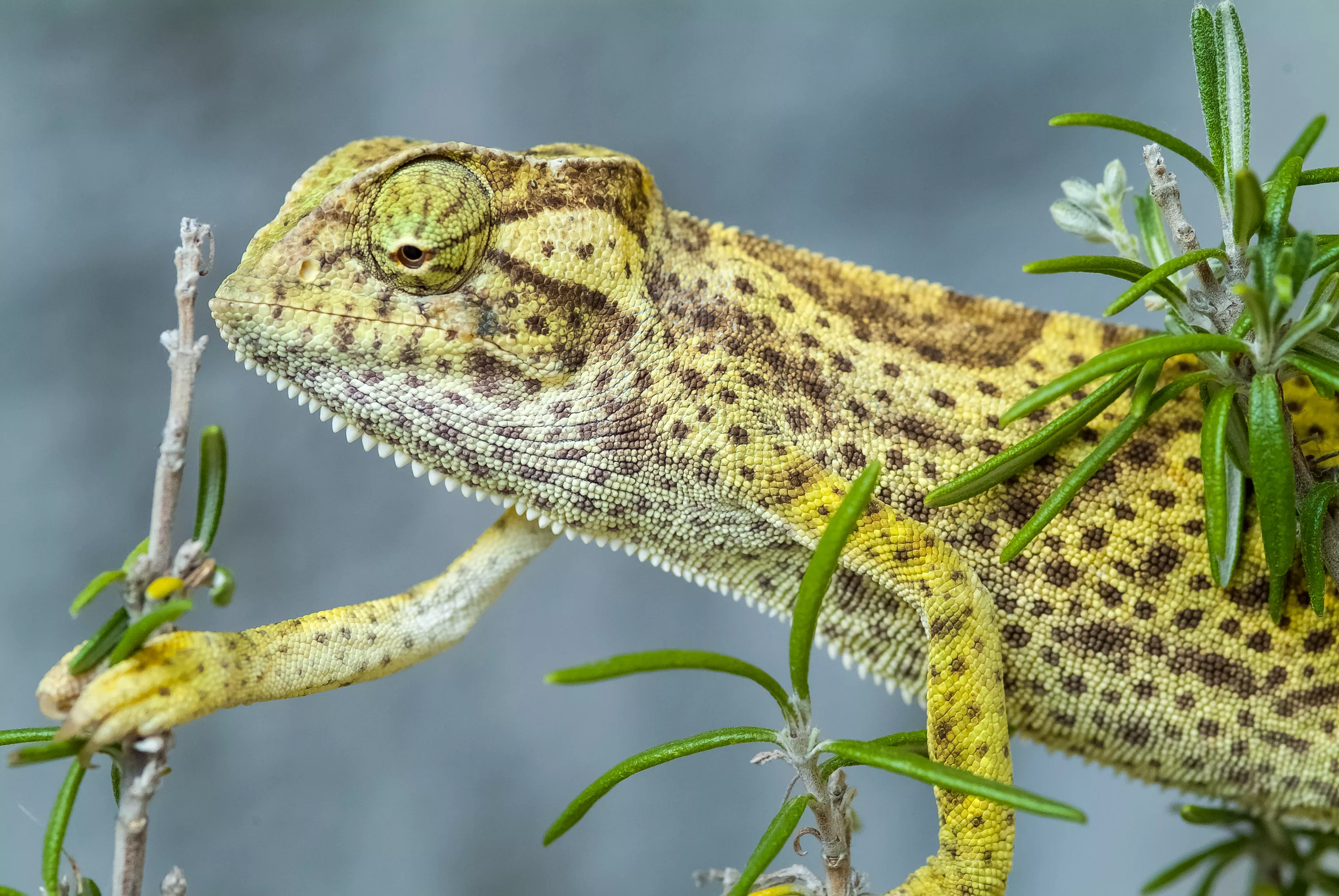
Senegal chameleons are among the four most popular species of pet chameleons. They are smaller chameleons native to West Africa but are just as beautiful and fragile as other species. Like many lizards, these chameleons do not tolerate much handling, so they may not be ideal pets for young children. However, by providing the ideal environment and diet, you can help your delicate reptile live a long life.
Senegal Chameleon Facts
Commonly known as the Senegal chameleon, Chamaeleo senegalensis is the scientific name of this small lizard. It can grow to eight inches long and live up to five years, though females that lay several clutches of eggs may not live as long.
Although striking to look at, Senegal chameleons are not suitable for novice lizard owners. Besides their aversion to handling, they can be aggressive toward other chameleons. Due to these traits, it's best to house them separately and enjoy observing them rather than handling them.
6 Essential Tips for Caring for a Chameleon Pet
:strip_icc():format(webp)/GettyImages-501642944-d301ac8bd13d4f2f93ce0a9832071bc1.jpg)
Senegal Chameleon Housing
The Senegal chameleon is a sensitive reptile, so its environment must be carefully controlled for it to thrive in captivity. A mesh or screened enclosure is ideal, providing good air circulation and ample climbing options. Ensure the enclosure is tall enough to allow vertical climbing. If a mesh or screened enclosure is unavailable, a 29-gallon tall tank is recommended.
Equip your Senegal's cage with plenty of vines and artificial plants for climbing, along with a dripper system unless you're diligent about misting the enclosure several times a day. Chameleons drink water from plant leaves, not bowls, so it's crucial to have wet leaves in the enclosure daily.
While mesh cages are ideal for chameleons, they do not retain the high humidity levels that Senegals require. Dripper systems, automatic misting, and foggers can help if you're not manually spraying water onto the leaves daily. Without sufficient humidity, your Senegal chameleon will become dehydrated, lethargic, and may have difficulty shedding.
Senegal Chameleon Heat and Lighting
Your Senegal enclosure should include both heat lights and a full-spectrum UVB light. The heat lights should maintain the basking area at about 85 degrees, while the rest of the enclosure should not fall below 70 degrees. Depending on room temperature, enclosure size, and type, different heat lights and wattages may be necessary to achieve these temperatures.
UVB lighting is essential as it boosts metabolism, appetite, and activity, and most importantly, synthesizes Vitamin D3 crucial for calcium absorption. It substitutes for the sun's UVB rays, which a chameleon would naturally obtain outdoors. Without UVB lighting, your chameleon may develop metabolic bone disease, restricted growth, and weakened or broken bones. Even with a calcium-rich diet, UVB lighting is necessary for absorption. Position the UVB light about 12 inches from the cage's highest point to prevent thermal burns. Ideally, it should not be filtered, especially by plastic or glass, as these greatly reduce UVB ray exposure.
Senegal Chameleon Food and Water
A Senegal chameleon in captivity likes to dine on crickets, mealworms, and other insects that are readily available in the pet trade. It catches its prey by shooting its long tongue out of its mouth. The tongue sticks to the insect and retracts back into the chameleon's mouth. A healthy chameleon focused on catching its food will successfully catch the insect in nine out of ten attempts.
Gut-loaded insects that are dusted with a calcium powder should be offered every few days, if not daily. You should never put more crickets in your chameleon's enclosure than he will eat in a short amount of time. Crickets left overnight may start biting your chameleon and cause small wounds that can become infected.
Also, since chameleons eat live prey, it is important to have a regular fecal examination performed by your exotics vet to check for microscopic intestinal parasites.
Choosing Your Senegal Chameleon
As with most pet lizards, it's best to purchase a Senegal chameleon from a reputable breeder, as it's difficult to know what parasites or hazards a wild-caught chameleon may have encountered. Ideally, observe the chameleon eating before purchasing. Refusal to eat may indicate poor health. Watch for signs such as cloudy eyes or excessive mucus around nasal passages and mouth, as these may indicate respiratory infections or other ailments. A chameleon with dry skin patches may have shedding problems, which is also concerning, as buying a sick chameleon is not ideal.
Common Health Problems
Senegal chameleons, like many reptiles, are prone to several different types of health issues.
If your chameleon seems unwell or is acting strangely, don't hesitate to consult a veterinarian who is experienced in treating reptiles. Most of these illnesses can be treated successfully if caught early.