Key Takeaways Veiled chameleons are territorial and should be housed individually due to their aggressive nature towards other chameleons.They require specific environmental conditions, including a tall mesh enclosure, proper heating and lighting, and humidity control.Veiled chameleons mostly feed on insects and require a varied diet supplemented with vitamins and minerals.
Key Takeaways
Veiled chameleons are territorial and should be housed individually due to their aggressive nature towards other chameleons.They require specific environmental conditions, including a tall mesh enclosure, proper heating and lighting, and humidity control.Veiled chameleons mostly feed on insects and require a varied diet supplemented with vitamins and minerals.
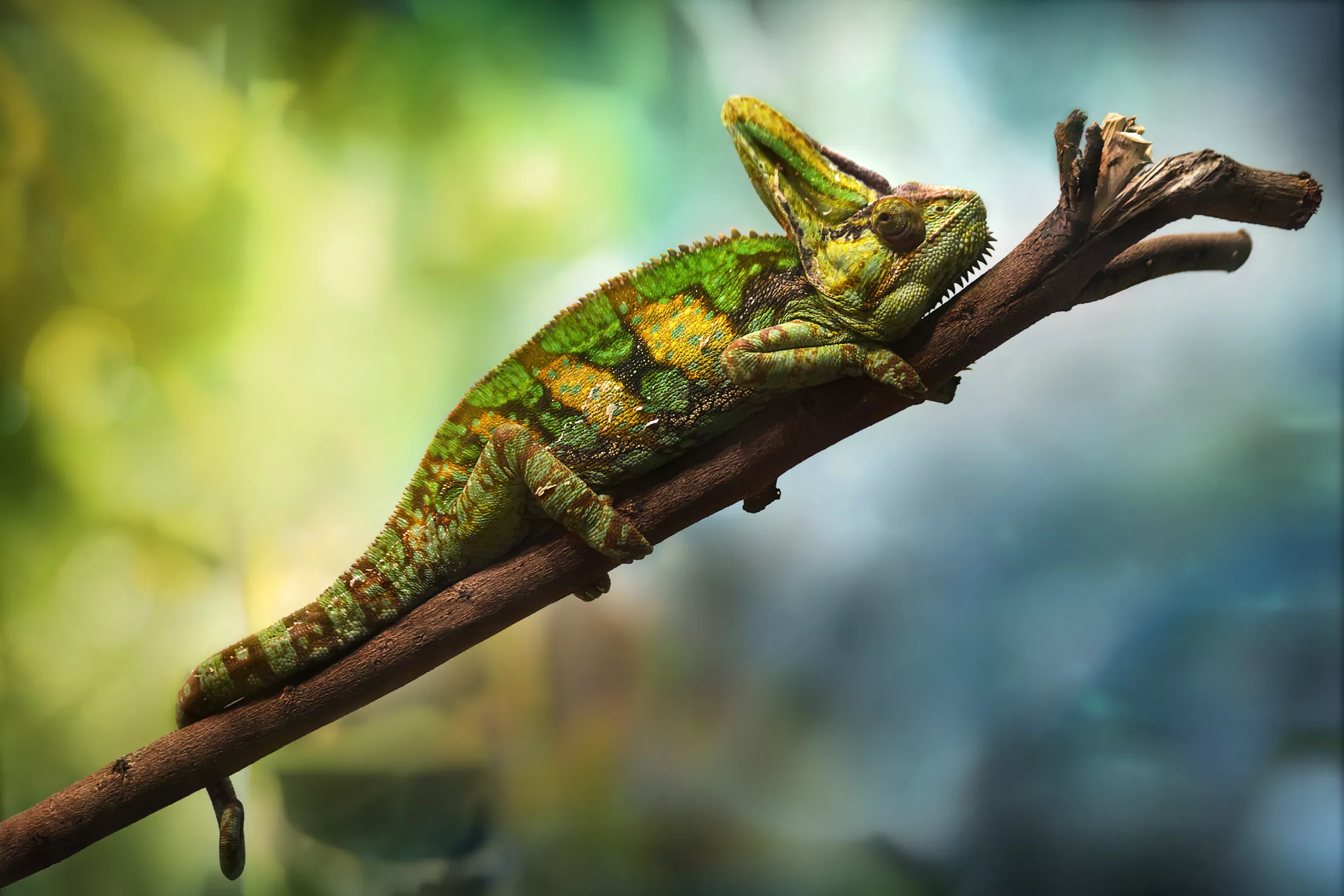
Veiled chameleons are resilient and eye-catching reptiles, known for the prominent casques, or helmet-like structures, atop their heads. Native to Yemen and Saudi Arabia, these chameleons have vibrant bodies banded in shades of green, yellow, and brown. Their colors can change to camouflage against predators. With monocular vision, each eye can move independently, and their strong tails enable them to grasp branches as they navigate their environment.
Explore comprehensive care tips for maintaining the health and well-being of a veiled chameleon as a pet.
Species Overview Names: Veiled chameleon (Chamaeleo calyptratus), Yemen chameleonLifespan: Approximately 6 to 8 years in captivitySize: Male veiled chameleons can grow to 18–24 inches in total length, with 12 inches from snout to vent plus the tail. Females are typically smaller, measuring 10–13 inches overall, with 4–6 inches from snout to vent plus the tail.
Species Overview
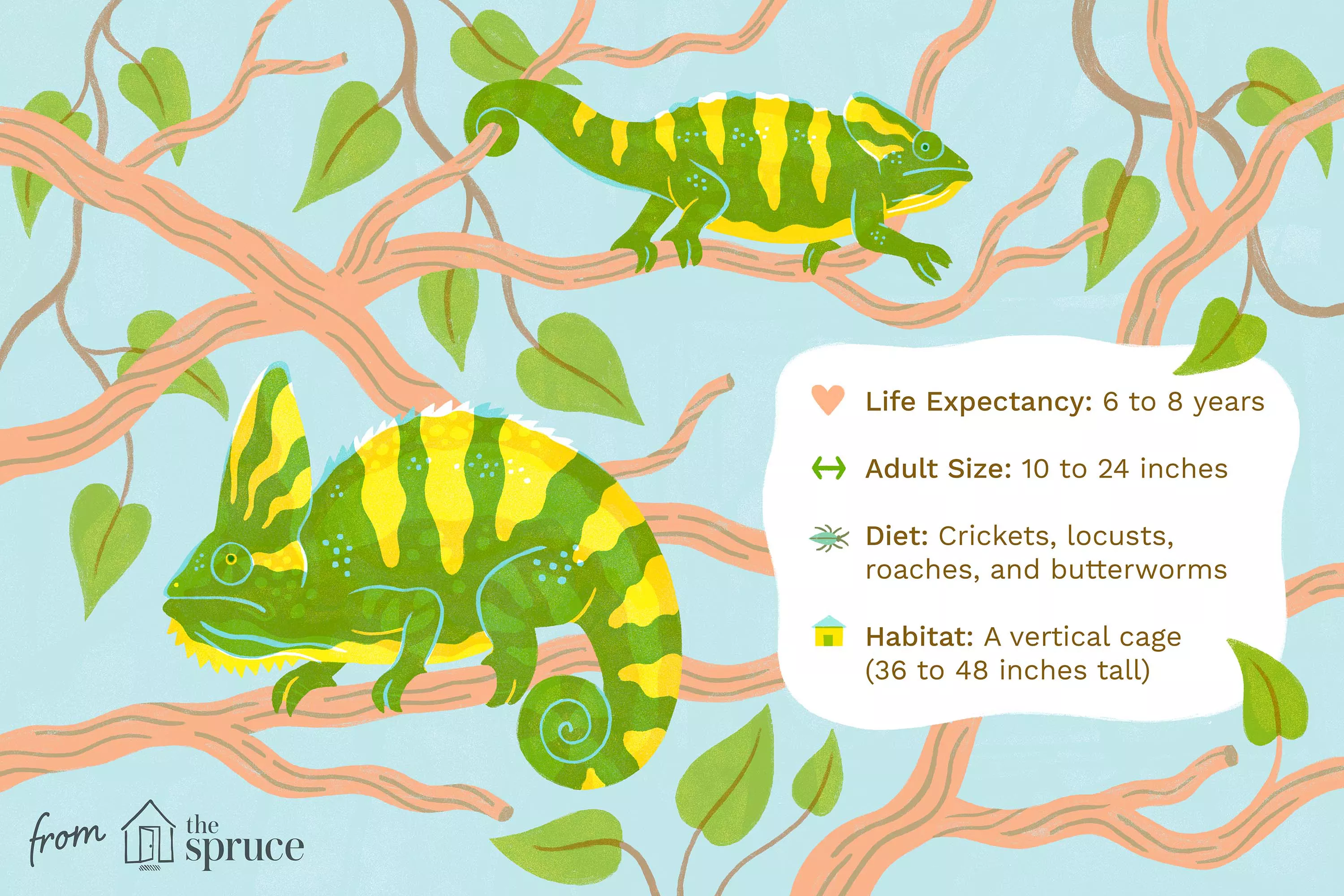
Names: Veiled chameleon (Chamaeleo calyptratus), Yemen chameleonLifespan: Approximately 6 to 8 years in captivitySize: Male veiled chameleons can grow to 18–24 inches in total length, with 12 inches from snout to vent plus the tail. Females are typically smaller, measuring 10–13 inches overall, with 4–6 inches from snout to vent plus the tail.
Veiled Chameleon Behavior and Temperament
Veiled chameleons are territorial and can be aggressive toward other chameleons, making it crucial to house them individually. They also should not share a habitat with other reptiles or animals.
Though generally docile with people, veiled chameleons find frequent handling stressful and may become aggressive if handled too often. They are better suited as pets to observe rather than interact with physically.
Veiled chameleons are unsuitable pets for small children or novice lizard owners due to their specific care needs.
Housing Veiled Chameleons
Vertical space is vital, with a recommended cage size of 36 by 24 inches, and 36 to 48 inches in height. The larger and taller, the better, as chameleons prefer climbing high. As your chameleon grows, transitioning them to a larger enclosure will be necessary.
Avoid housing chameleons in glass terrariums or aquariums, as they require the ventilation that mesh enclosures offer. Opt for a PVC-coated hardware cloth rather than fine metal or fiberglass mesh.
During warm weather, an outdoor cage is an option, provided there are measures in place to prevent overheating.
Maintaining cage cleanliness is crucial to avoid bacterial or mold growth. Line the cage with newspaper or paper towels for easy cleaning, and add a reptile dirt mixture on top. Avoid wood chips or substrates that can be ingested, leading to blockages.
Use plenty of strong, non-toxic plants and branches in the enclosure. While Ficus trees are common, their sap can be irritating, so exercise caution.
Consider using pothos, hibiscus, and dracaena. You can also include artificial plants and vines. Ensure a variety of branches are available, with secure perches at different levels and temperatures, for your chameleon to climb.
Heating and Lighting
Provide a daytime temperature range of 72 to 80°F, with a basking spot at 85 to 95°F for veiled chameleons. Night heating is unnecessary if home temperatures remain between 65 to 70°F.
Daily temperature checks in the enclosure are critical, as improper conditions can lead to illness in reptiles.
Use a basking or incandescent light, or a ceramic heat element, placed outside the cage, to achieve the required basking spot temperature and prevent burns.
Chameleons require a full-spectrum ultraviolet (UVA/UVB) light source. Operate this UV light for 10 to 12 hours daily, and install the bulb according to the manufacturer's recommended distance—typically 6 to 12 inches from climbing areas.
Replace UV bulbs every six months. Chameleons benefit from time in natural sunlight when temperatures permit, ensuring shade is available to prevent overheating.
Humidity and Hydration: Ensuring Proper Moisture Levels
Maintain a moderate humidity level around 50% for veiled chameleons. Misting the plants twice daily aids in reaching desired humidity, and using a misting or drip system is recommended.
Chameleons seldom drink from bowls but lap water droplets from plants, making the misting/drip system a crucial water source. Position the drip system to allow water droplets to cascade over enclosure plants.
Use a hygrometer to monitor humidity levels accurately.
Food and Water
As primarily insectivores, veiled chameleons should receive a varied insect diet every other day, including:
All insects should be gut-loaded. Many veiled chameleons will also eat a bit of plant matter so it is vital that only non-toxic plants are used in your chameleon's enclosure.
You can offer small amounts of vegetables and fruits such as:
Monitor your chameleon's feeding habits and adjust portions accordingly. Reduce feeding if many insects remain uneaten or if your chameleon appears overweight.
Avoid wild-caught insects because they might be exposed to pesticides. Never feed lizards ants or fireflies, as they can be harmful.
Dust insects with a calcium/vitamin D3 supplement two to three times weekly. Add a multivitamin and mineral supplement once weekly. Experts often suggest supplements without vitamin A, opting for beta-carotene instead.
Tip Be wary of wild-caught insects due to possible exposure to pesticides and always avoid feeding lizards ants or fireflies.
Tip
Be wary of wild-caught insects due to possible exposure to pesticides and always avoid feeding lizards ants or fireflies.
Choosing Your Veiled Chameleon
Like most exotic reptiles, determining if a wild-caught chameleon has been exposed to parasites or infections is challenging. Opt for veiled chameleons from reputable breeders. Observe the chameleon eating before purchasing to check for any appetite issues.
Cloudy eyes or mucus around the mouth or nasal passages can indicate illness in chameleons. Dry skin patches might suggest shedding issues.
After selecting a veiled chameleon, consult a reptile veterinarian for a parasite check, as the condition may not be readily apparent.
Common Health Problems
Veiled chameleons, like many reptiles, can experience infections and stress-related problems. Proper conditions can mitigate these risks. Be vigilant for issues such as:
Similar Breeds of Chameleon
If you're interested in keeping a chameleon but remain undecided, consider these alternative options:
You also may want to check out our profiles of other reptiles.