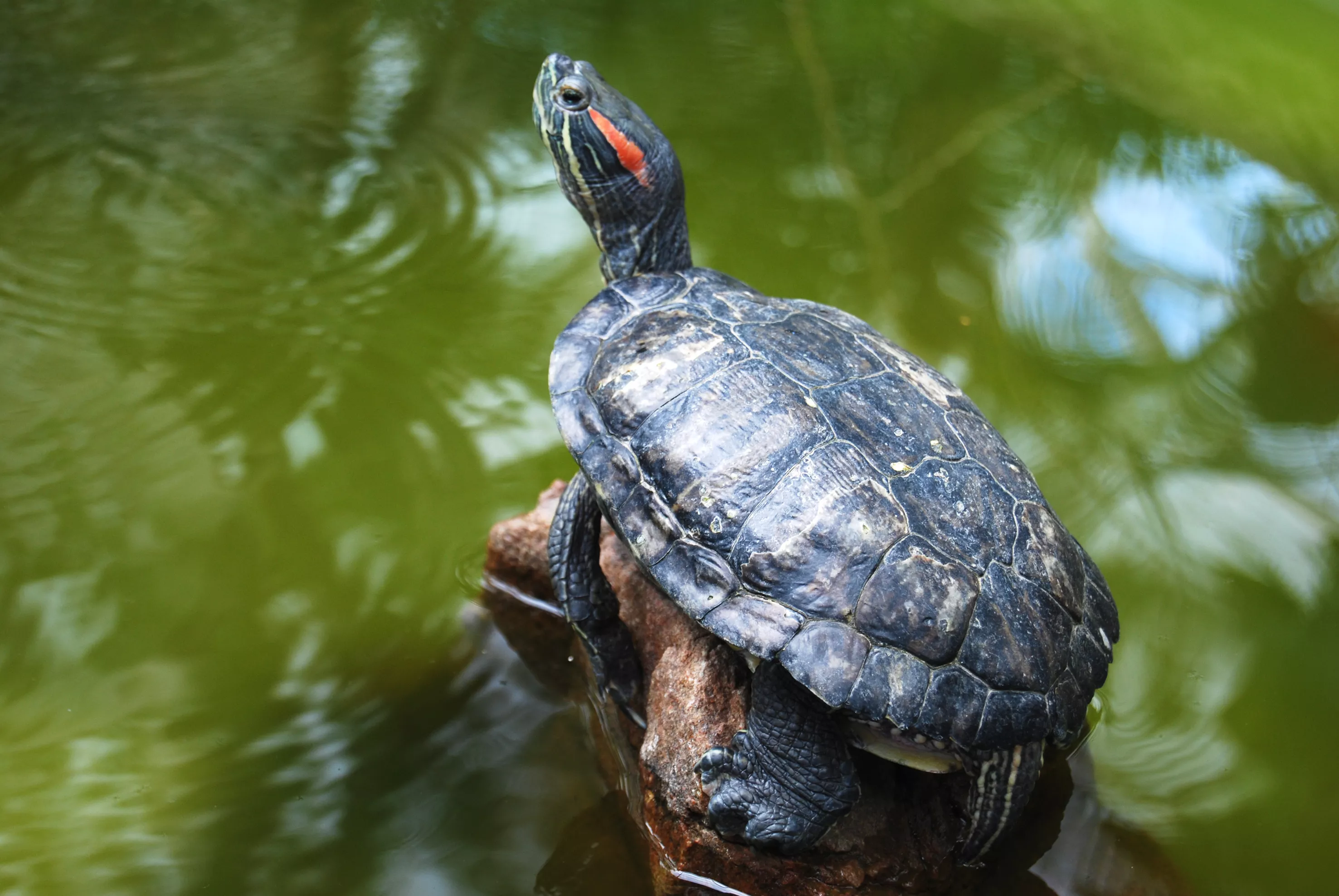
Key Takeaways Young red-eared sliders require more animal protein, so their diet should be more carnivorous.Vegetation should gradually become a more significant portion of the diet as turtles mature.A mixture of commercial pellets, prey items, leafy greens, aquatic plants, and some vegetables provides a balanced diet.Calcium supplements and cuttlebone are recommended to ensure proper nutrition.Avoid feeding iceberg lettuce, raw meats, and unverified wild prey.
Key Takeaways
Young red-eared sliders require more animal protein, so their diet should be more carnivorous.Vegetation should gradually become a more significant portion of the diet as turtles mature.A mixture of commercial pellets, prey items, leafy greens, aquatic plants, and some vegetables provides a balanced diet.Calcium supplements and cuttlebone are recommended to ensure proper nutrition.Avoid feeding iceberg lettuce, raw meats, and unverified wild prey.
Red-eared sliders require a mixed diet of both animal and plant materials. Young sliders consume more animal protein, so baby turtles should begin with a diet that leans towards carnivorous options.
Offer vegetation to young turtles, even if they may not eat it until they're older. Introducing it early can prevent reluctance in consuming vegetation as they mature, which is important since vegetation should be a major part of an adult slider's diet.
What Do Turtles Eat?
Commercial pellets are nutritious, convenient, and beneficial as they contain a variety of vitamins and minerals. However, offering a range of foods is better than relying solely on pellets, as fresh food varieties provide more diverse nutrients.
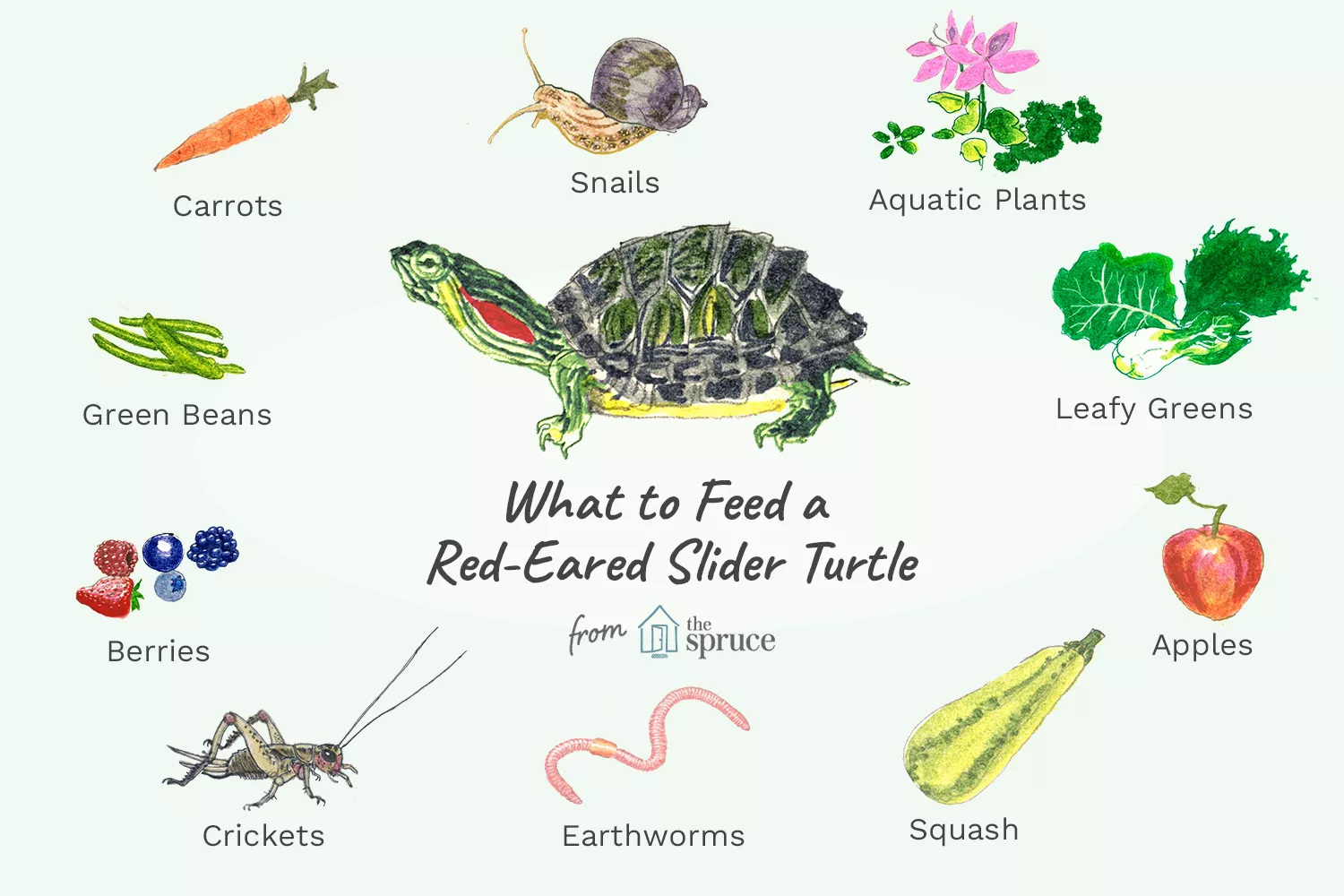
Feeding a variety of items is also more stimulating to the red-eared slider, and provides enrichment. Live prey is particularly valuable as it supports natural hunting instincts. Limit pellets to about 25% of the diet and supplement with the following options:
Nutritional Supplements for Red-Eared Sliders
A vet may recommend mixing a reptile multivitamin with calcium and vitamin D3 into the turtle's food a few times a week. Provide additional calcium by adding a cuttlebone to the tank, which can be found in the bird section of pet stores and attached with suction cup clips or simply floated in the water.
Tips Catching wild prey can be dangerous if they have pesticides on them, and they can also carry intestinal parasites. The same goes for vegetation like dandelion greens that you pick outdoors.Some experts recommend fresh fruits such as bananas, berries, apples, and melons. However, this isn't a natural staple in the red-eared slider's diet, and it may cause diarrhea. If you offer any fruit at all, limit it to very small quantities as a special treat.Don't feed frozen fish, or at least not very often. Freezing some types of fish increases levels of an enzyme in the fish that destroys vitamin B1.Cooked chicken and lean beef don't offer balanced nutrition and will foul the water very quickly. Use these only as very occasional treats in a feeding tank. The protein contents can also contribute to kidney disease in your turtle.Never feed raw chicken or meat due to the risk of bacterial contamination to both you and your captive turtle.
Tips
Catching wild prey can be dangerous if they have pesticides on them, and they can also carry intestinal parasites. The same goes for vegetation like dandelion greens that you pick outdoors.Some experts recommend fresh fruits such as bananas, berries, apples, and melons. However, this isn't a natural staple in the red-eared slider's diet, and it may cause diarrhea. If you offer any fruit at all, limit it to very small quantities as a special treat.Don't feed frozen fish, or at least not very often. Freezing some types of fish increases levels of an enzyme in the fish that destroys vitamin B1.Cooked chicken and lean beef don't offer balanced nutrition and will foul the water very quickly. Use these only as very occasional treats in a feeding tank. The protein contents can also contribute to kidney disease in your turtle.Never feed raw chicken or meat due to the risk of bacterial contamination to both you and your captive turtle.