Key Takeaways
- Hamster Health and Diseases can become serious fast since these tiny pets hide illness well — catching problems early really does save lives.
- Watch for red flags like loss of appetite, lethargy, sneezing, diarrhea, or a wet tail, and get to the vet if you spot them.
- Prevention matters: skip cedar bedding, feed a balanced diet, and keep your hamster's space draft-free.
- Never give your hamster antibiotics without veterinary guidance — some medications can be fatal to them.
Spotting When Something's Wrong
Hamsters are surprisingly good at pretending they're fine, even when they're not. It's just how they're wired — in the wild, showing weakness makes them vulnerable to predators. So it's up to you to notice the subtle signs that something's off.
Keep an eye out for these common warning signals:
- Loss of appetite or refusing treats they usually go crazy for
- Less running on their wheel or playing than normal
- Huddling in a corner looking hunched or quiet
- Ruffled, unkempt fur instead of their usual sleek coat
- Sneezing, wheezing, or goopy discharge from the nose or eyes
- Wetness around the tail
- Diarrhea or loose droppings
- Bald patches, which could signal parasites or allergies
If you notice any of these, try keeping your hamster warm and offering water or food with a dropper if they're not eating. Then get to the vet as soon as you can.
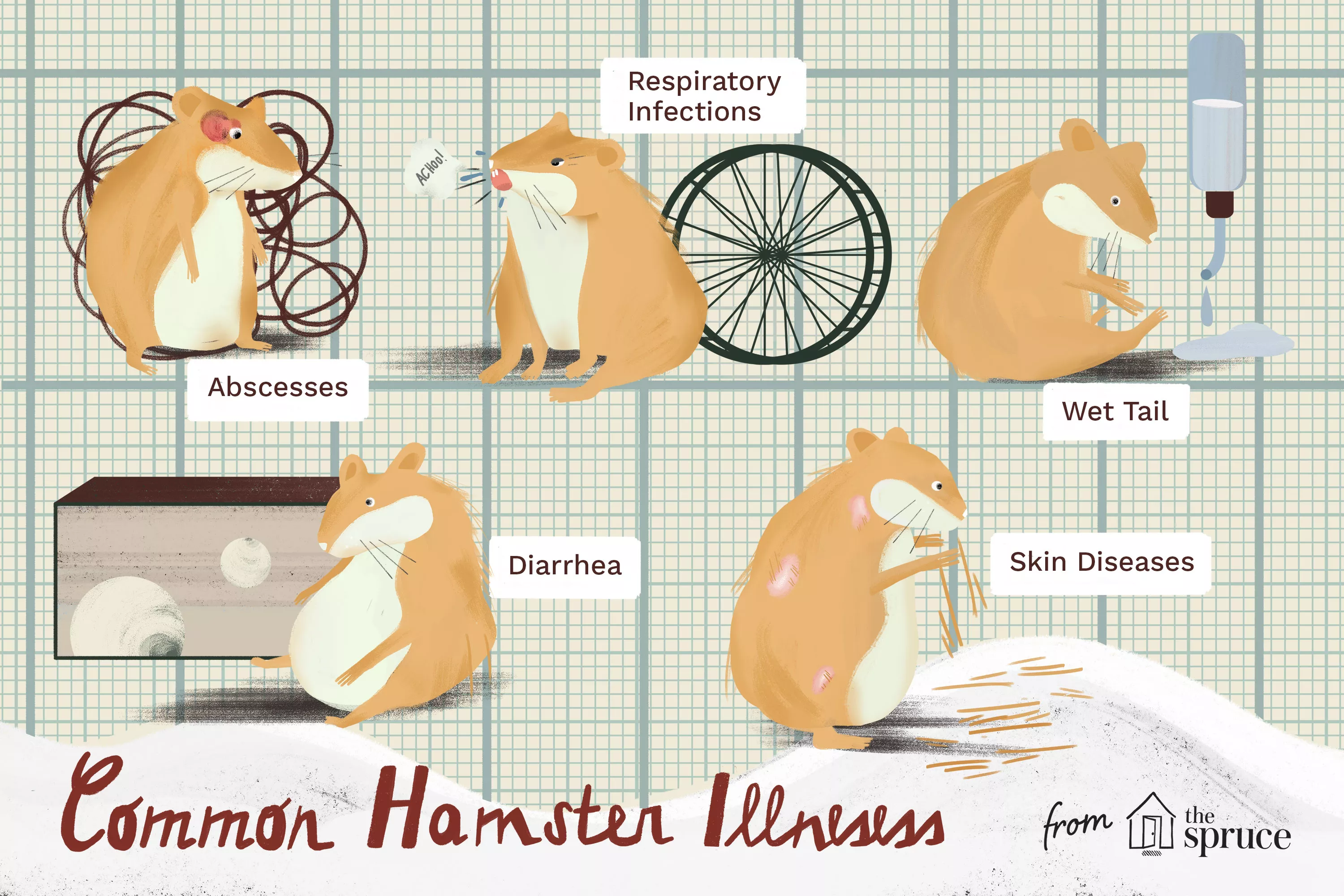
Abscesses in Hamsters
Sometimes small cuts or scratches can turn into pockets of infection called abscesses. Pus builds up under the skin, creating a lump that might eventually burst and drain on its own. They can also form inside the cheek pouches if rough food scratches the sensitive lining inside.
If your hamster always looks like it's storing food in its cheeks — even when the food's been gone for hours — there might be an abscess or an impacted cheek pouch lurking in there. You'll need your vet to drain it, flush the area, and likely prescribe antibiotics to clear the infection.
Respiratory Infections and Pneumonia
Hamsters can develop respiratory infections that sometimes progress to pneumonia, which is obviously serious. Signs to watch for include sneezing fits, watery or crusty discharge from the eyes or nose, wheezing, and labored breathing.
Now, the occasional sneeze isn't usually a reason to panic. But if your little one starts showing other symptoms alongside the sneezing — like not eating, acting sluggish, or having obvious trouble breathing — get veterinary care right away.
Preventing Respiratory Problems
Certain things can make your hamster more vulnerable to respiratory infections. Drafts and sudden temperature changes are big culprits. Some types of bedding are problematic too. Cedar and certain pine shavings can irritate their delicate respiratory tracts, so it's best to stick with paper-based or Aspen bedding.
Wet Tail: A Serious Emergency
Wet tail, also called proliferative ileitis, is a highly contagious bacterial disease that most often affects young hamsters who've just been weaned. It can come on suddenly and progress rapidly.
The exact cause isn't always clear, but stress, overcrowding, and sudden diet changes seem to play a role. Affected hamsters may show diarrhea (hence the "wet tail"), become extremely lethargic, stop eating, and develop a ruffled coat. Tragically, some hamsters can die within days of showing symptoms.
Not every hamster with diarrhea has wet tail, but it's absolutely worth a vet visit if you see any combination of these signs. Early treatment can make all the difference.
Diarrhea and Digestive Upset
Diarrhea in hamsters can stem from several causes: infections like wet tail, intestinal parasites, antibiotic treatment, or — very commonly — eating too many fresh vegetables or fruits.
If your hamster has soft stools but is still acting normal and eating fine, you might just be overdoing it with the fresh foods. Withhold veggies and fruit for a couple of days and see if things firm up. When you reintroduce them, go slowly so your hamster's digestive system can adjust.
The real concern with diarrhea is dehydration. Make sure your hamster is still drinking water. If you notice lethargy, sunken eyes, or they stop drinking — that's a veterinary emergency.
Skin and Coat Problems
Hamsters can deal with various skin issues including mites, ringworm (a fungal infection), allergic reactions, and bacterial skin infections. Your vet can diagnose most of these with a simple skin scraping.
Hair loss itself isn't always alarming — it can be seasonal or normal in older hamsters. But if you notice flakiness, redness, scabs, or your hamster is scratching constantly, it's time for a vet check.
One more thing: hamsters have scent glands on their flanks that can look dark and a bit alarming if you're not expecting them. They're totally normal, shouldn't look red or irritated, and aren't anything to worry about.
Antibiotics and Hamsters: A Word of Caution
Here's something most new hamster owners don't know — some antibiotics can be fatal to hamsters because of how their gut microbiome works.
You should never give your hamster any medication without explicit instructions from a vet who knows small animal medicine. Antibiotics to avoid include penicillin, amoxicillin, ampicillin, streptomycin, tetracyclines, erythromycin, vancomycin, and several others in that family.
If your hamster needs treatment, trust your exotic vet to prescribe something safe. Their life could depend on it.
Remember, when in doubt, call your vet. These little ones deserve the same careful attention as any other family pet.