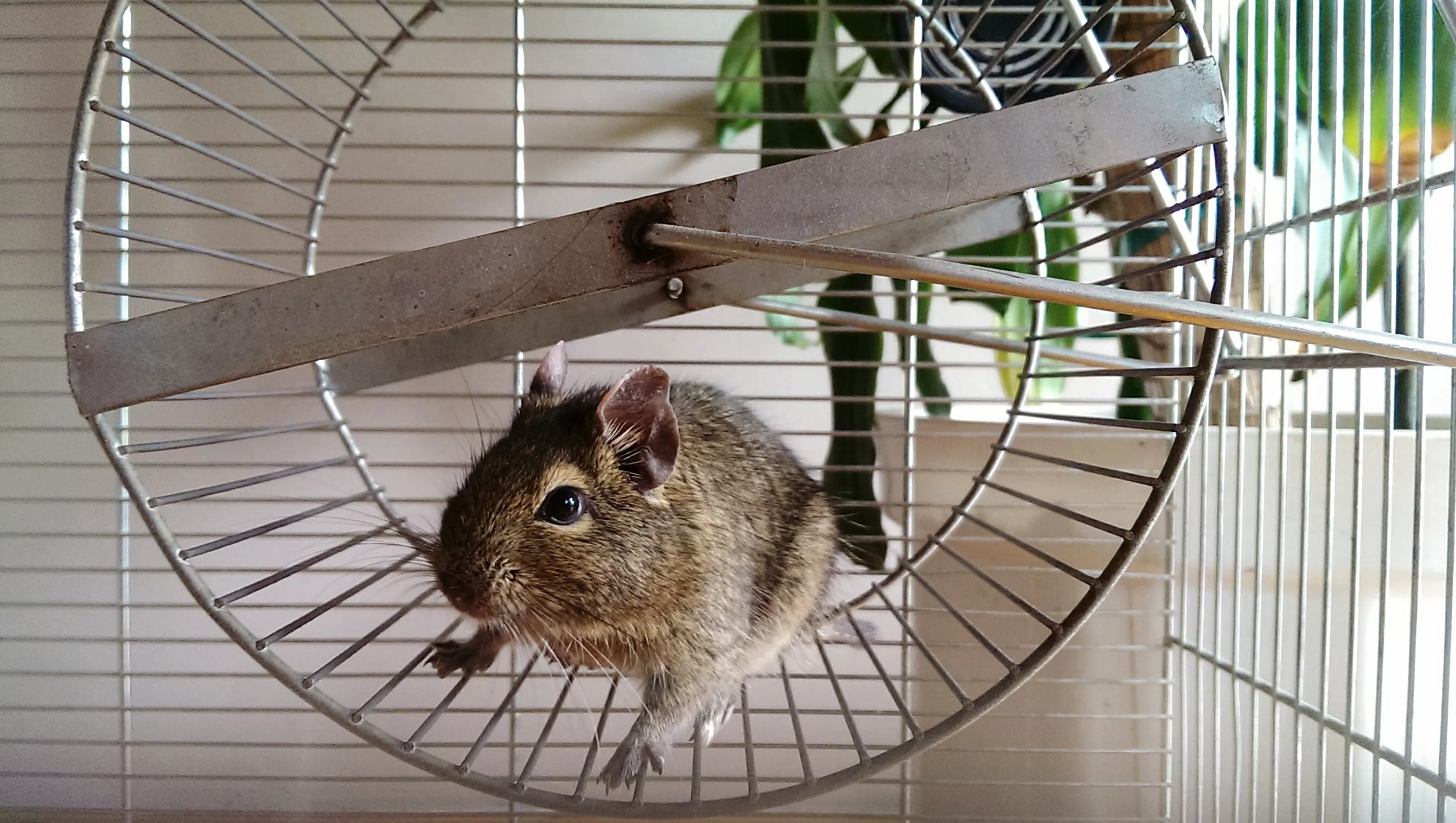
Hamster Wheels and Balls
Most hamsters benefit greatly from a hamster wheel, which should be correctly sized and have a solid surface to reduce injury risk. "Run-Abouts" are clear plastic balls your hamster can safely explore in, offering exercise without the risk of escape. Both options are excellent for ensuring your hamster stays active.
Credit: Lukasz Wisniewski / EyeEm / Getty Images
Chew Toys for Hamsters
Hamsters need toys to gnaw on, as this maintains their ever-growing teeth in good condition. Wooden pet chew toys are excellent, but ensure any wood not store-bought is free from pesticides and chemicals, avoiding cedar and other evergreens. Pesticide-free fruit tree branches or untreated hardwood are suitable. Willow balls, rings, and tunnels, often marketed for rabbits, are also great for hamsters.
In addition to wood chews, cardboard can be provided for chewing (and hiding). Hamsters also love cardboard tubes from paper towel and toilet paper rolls and there are now commercial tubes that are a bit sturdier and are said to be safe for chewing (e.g. Totally Chewbular Play Tubes).
Climbing and Housing Options for Hamsters
There are a variety of climbers and houses/huts designed for hamsters and other small rodents. Wood ladders and climbing blocks are great for hamsters. If you can't find wood ladders in the hamster section of your pet store, check the bird section.
You can also use hardwood dowels and wood to make ramps and climbing structures. Coconut shells can also be used to create huts and houses. Organic ropes (hemp, sisal, and cotton) can also be used to construct hanging toys, walkways, and bridges in the hamster cage. Extreme caution is required with hanging toys and ropes—use thicker sizes of rope and be sure your hamster (head, body, legs, or toenails) cannot get entangled in any ropes used to hang items or use them only under close supervision.
Credit: © jade_c / Getty Images
Plastic Toys for Hamsters
Exercise caution with plastic play items, as hamsters often chew tunnels and tubes, which can be problematic. If a hamster swallows plastic pieces, it poses a significant risk. Always monitor use, and discard any toy being overly chewed on.
Sand and Digging Options for Hamsters
You can provide a dish of chinchilla dust bath or fine sand, in which your hamster may roll to keep its coat in good condition. Also, most hamsters love to dig so providing a deeper box of sand or sterilized soil big enough for the hamster to burrow in is a great treat for hamsters.
Mineral Blocks and Pumice Stones for Hamsters
Mineral blocks and pumice stones are optional; they can help maintain dental health if used but are often too hard, making natural wood chews preferable. Ensure dietary provisions fulfill mineral needs.
Explore more:
- Small Pets
- Hamsters