Key Takeaways
- Set up your hamster's habitat before they arrive to keep stress to a minimum
- Give your new hamster time to adjust without interference for the first few days
- Handle them gradually once they're comfortable, and let trust develop naturally
The first 30 days with your pet hamster is a big adjustment period—for both of you! While it might feel tempting to dive right into cuddles and playtime, taking things slow will make a huge difference in how quickly your little friend settles in.
Before Bringing Your Hamster Home
Getting ready before your hamster arrives is key to a smooth transition.
First, think about where you'll place their cage. You don't want them tucked away in a forgotten corner, but you also don't want them right in the middle of all the hustle and bustle. Hamsters are nocturnal, so they'll be snoozing through most of the daytime chaos. A calm spot where they can still hear household sounds is ideal.
Make sure you've got everything set up beforehand. You don't want to be scrambling to put their habitat together while they're waiting in their carrier. A proper hamster cage setup includes a suitably-sized enclosure, high-quality hamster food, cozy bedding, nesting areas, and plenty of hamster toys to keep them entertained.
Consider it a checklist for their new life: bedding, food, water bottle, wheel, hideouts, and safe chews. Getting this all ready ahead of time means you can focus entirely on helping your pet hamster adjust once they step paw into their new home. One fun thing you might want to do? Start thinking about names for your hamster—it's a great way to get the whole family involved.
First Day
You've waited forever, and now your new hamster is finally home. Everyone's going to be excited, but here's the thing: your hamster needs space right now.
The first few days should be all about letting them adjust. Cover the cage with a thin, breathable sheet to reduce visual stimulation—this helps prevent overwhelm as they take in all the new sounds and smells of their environment.
Skip the hands-on interaction for now. Instead, sit nearby and talk to them softly so they get used to your voice. If you know what food they've been eating, stick with it for the time being. Switching their diet too quickly can upset their stomach, so hold off on any changes until they're more settled.
Day 10
By day 10, your hamster is probably feeling more at home. They've figured out where the good sleeping spots are and are starting to get the hang of their routine. If you've been gradually switching their food, they should be fully adjusted by now.
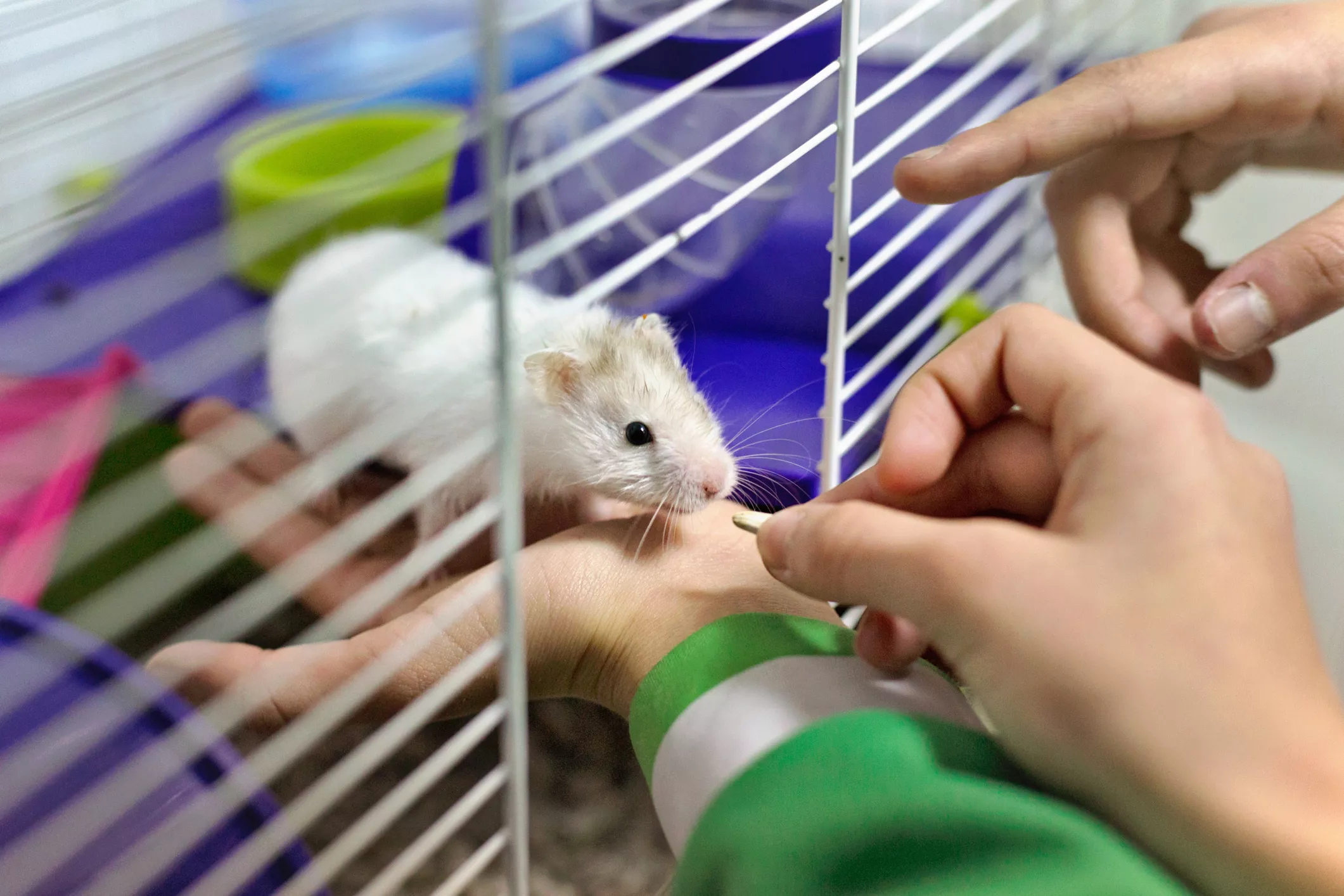
This is when you can start working on taming and handling. Remember, trust-building is a marathon, not a sprint. Place your hand in the bottom of the cage with your palm up and fingers relaxed. Let your hamster come to you. They might sniff your fingers or even give them a tiny nibble—don't jerk away if they do! That kind of reaction can scare them and set back your progress.
If your hamster seems curious, try offering a treat from your palm. This builds positive associations and makes your hand feel like a good thing rather than something to fear.
As they become more comfortable, you can gently coax them onto your hand and hold them for just a minute or two. Keep sessions short and always positive. If they squeak or seem anxious at any point, pop them back in their cage. Never grab or force them out—it's the fastest way to break the trust you've been building.
Day 30
By day 30, you should have a much better sense of your hamster's personality and preferences. Some hamsters might already hop right into your hand willingly, and that's amazing! Others might still be a bit more cautious, and that's completely okay too.
Hamsters are naturally wary little creatures. In the wild, being cautious kept them alive. So try not to be discouraged if your new pet is taking longer to warm up to you. Every hamster is different, and that's part of what makes them so endearing.
Now that you know them better, you can tailor their activities and treats to what they actually enjoy. Maybe they're a wheel-running champion who logs miles every night. Or perhaps they love exploring in a hamster ball. You'll figure it out together!
The key to hamster care in those first few weeks is patience. With a little preparation and a lot of understanding, you can make those first 30 days as smooth and stress-free as possible. And honestly? The payoff of building a genuine bond with your furry little friend is absolutely worth it.